
Lecture on Serbs in Corfu
Stand still, imperial galleys...
Ljubomir Saramandic, Curator of the Serbian House in Corfu, held an interactive lecture about Serbs in Corfu at the Military Academy, which attracted great interest of cadets and their teachers.
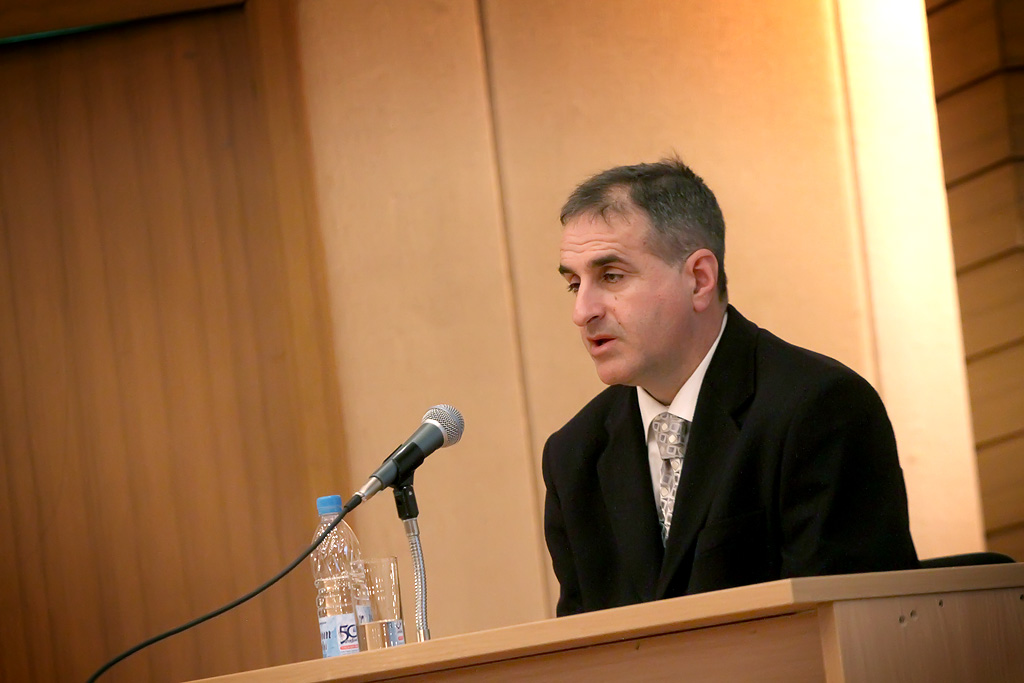 In a crowded movie theatre, during an exhaustive and very inspiring presentation about the suffering of the Serbian Army on its way through Albania, one could hear nothing but the emotional voice of a man who has been telling the story of Calvary of the surviving Serbs and the Blue grave on the island of Vido for 14 years.
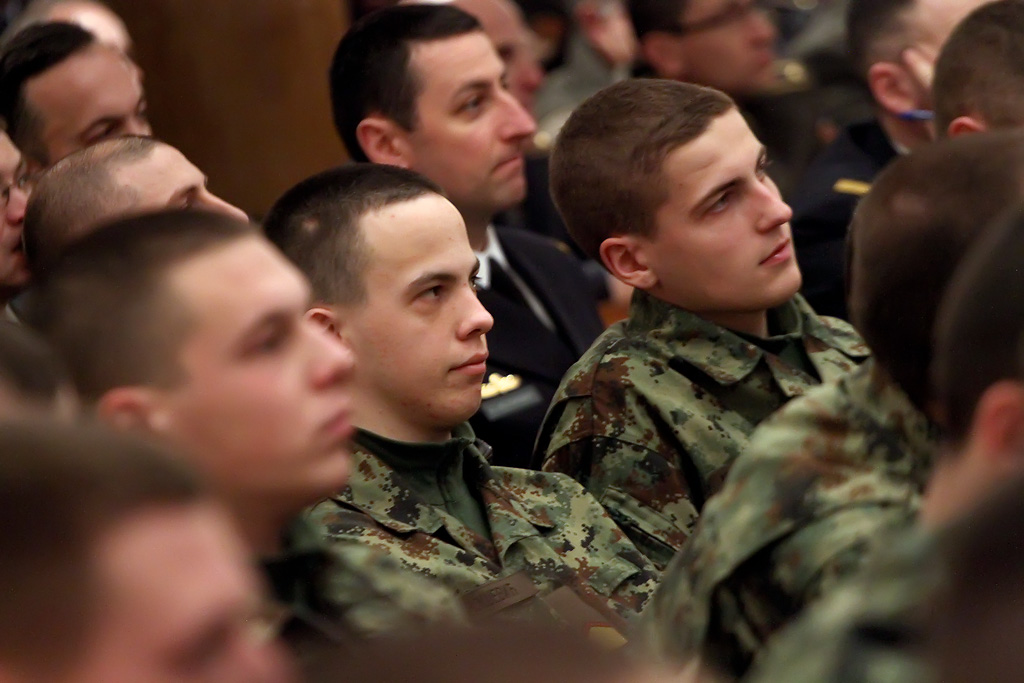
The silence that reigned in the theatre testified about the storm of feelings caused by horrific details about the number of the killed and the dead in Corfu. Countless columns of hungry and exhausted Serbian officers, soldiers and people, decimated during the crossing of the Albanian gorges, exhausted by hunger and typhus, of weakened immune system, were lining in the minds of cadets as they listened to the facts about the suffering of the Serbian Army. More than 243 thousand members of the Serbian Army perished before reaching Corfu. And there, where they were supposed to find salvation, the dying continued. After medical triage and cruel, but inevitable, division into those for whom there was hope in recovery and those others who were already in the clutches of death and transported to the nearby island of Vido to be buried there, first on the ground, and then in the waters of the Ionian sea, 100 to 150 combatants were dying per day, mostly the youngest ones, just recruited.
 - There are so many examples of suffering of the Serbian soldiers on their way to Corfu, which was unprecedented in the previous national history, curator Ljubomir Saramandic emphasized, citing some of them. – Crossing of Albania lasted from 20 to 40 days, and there was food only for ten. Albanian population was quite inhospitable, the food was hard to get and bread was a luxury. In such conditions, morale was fantastic. Upon arrival at Corfu, the exhausted Serbian soldiers did not steal any orange or broke any branch of olive tree; there was no fight or violent behaviour towards their, at the very start untrustworthy hosts. Very soon they were rewarded for that. After the first few days of mistrust, Corfiots received them generously, heartily offering them hospitality. Even today, in the dictionary of Corfiots there are Serbian words such as house, bread, water ... The islanders will never forget those most common words of the Serbian soldier in Corfu, Saramandic said.
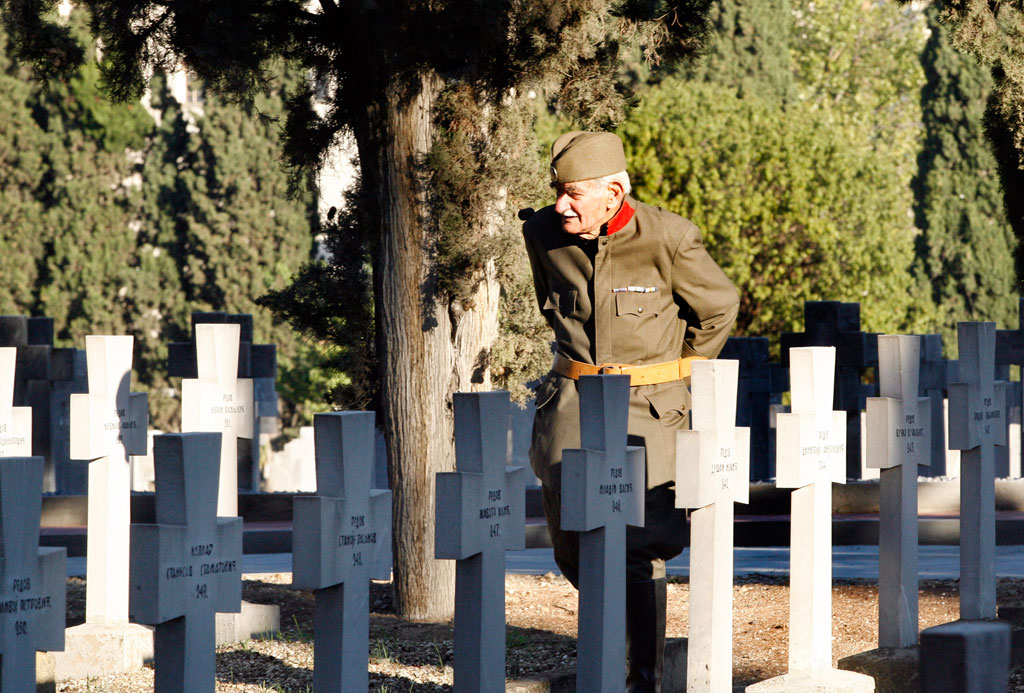 Nearly two-hour lecture, organized by the Department for Standard, Tradition and Veterans, was accompanied by an abundance of photographs stored in the Serbian House in Corfu. Testimonies of high morale of soldiers whose triumphant spirit returned in more than a month, of the members of the Battalion of 1300 Corporals, who, after the reorganization of the Army in Corfu and equipping with new weapons and equipment, could not wait to go back to front, did not leave indifferent male and female cadets of the Military Academy.
The lecture, which was attended in large numbers, will undoubtedly be another very strong link in the chain of morality, patriotism and strength that inspires them during their education for the officer’s call. And the words of one of the most beautiful and the most moving patriotic songs, the Blue Grave, will undoubtedly take many of them to Corfu and the island of Vido, the Mausoleum, the eternal testimony of sacrifice of our ancestors, which they suffered for the freedom and survival of the nation. In the First World War, Serbia lost a third of its population. A large portion of the victims remained exactly in Corfu.
