
19.10.2011.
General Miletic's interview for Pravda
There is part in the field of defense that would be an obstacle to obtaining official candidacy for EU membership. According to the European Commission, the security sector has come the furthest in reform, as the Chief of the Serbian General Staff General Miloje Miletic, said for Pravda daily commenting on the report of the European Commission on granting Serbia the candidate status for EU membership.
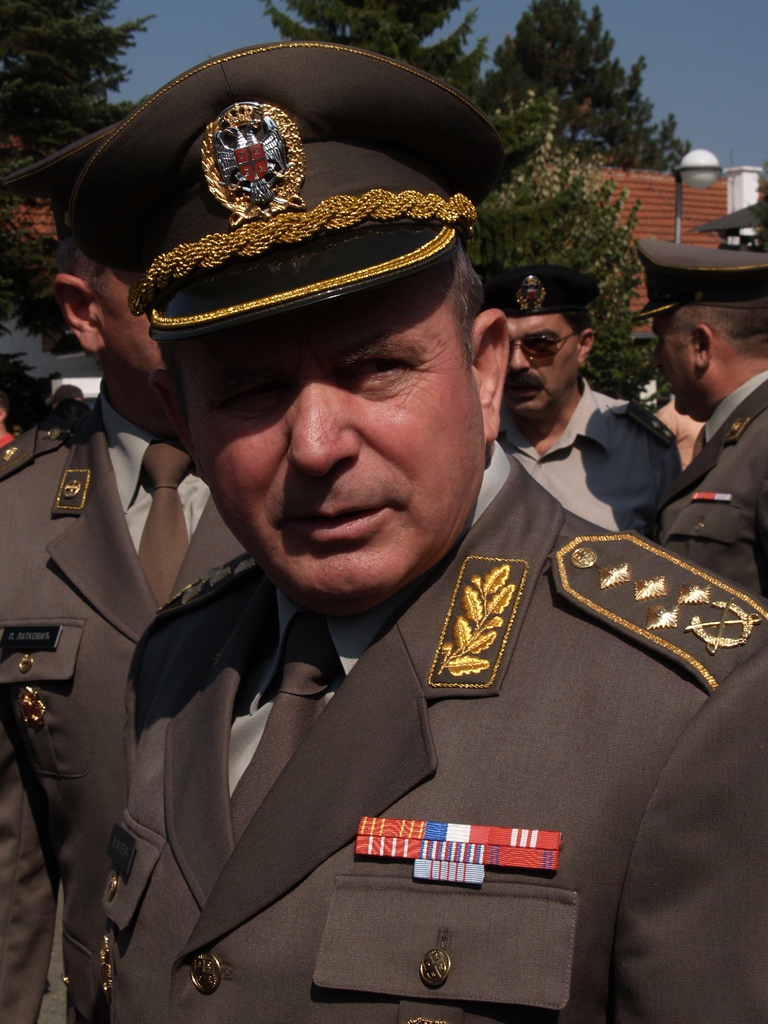 What is the army of Serbia’s position and how does it rank in relation to other militaries in the region? Croatia is about to enter the EU, but to us it seems that SAF have undertaken the reform process more seriously?
 - Reforms of the armed forces, that is of the security sector is just one of many segments for EU accession. So I think that there is no need to make any comparisons between our armed forces with the armies in the region. On the other hand, despite the fact that Serbia is lagging behind in many segments, where army is concerned-we are at par with other armies in the region. Nor do we lag when it comes to organization, system of training or integration. Our interests are different. Their interest is full membership in NATO, our interest at this point is good cooperation with NATO through the Partnership for Peace.
Many citizens of Serbia think of the abolition of the classic military service as a weakening of Serbia’s military and defensive power, partly as a degradation, which affects the readiness of the Serbian army should God forbid, the need for defense arise.
- We can not live as our ancestors lived a hundred years ago. Things and conditions change. The whole society is changing, evolving, and the security sector is developing as well. Accordingly, our army is developing and changing too. Professionalization is one of the key problems in the armies around the world. That's what we did. In doing so, we did not deny the right of our citizens who want to train for national defense to voluntary military service. Therefore we cannot talk about the collapse of the security system, but on the contrary - that the construction of the security system has now a new basis, which has a new quality. You can see for yourself that the system of national security reaches a multi-national level, which means that there is ongoing integration, focusing on joint action, and the is increasingly being conceived and organized to perform tasks other than traditional and some that are appropriate to the contemporary moment of humanity, for example, when various environmental or natural disasters.
The defense system cannot, however, count on the participation of citizens in defense. Citizens in many countries have a duty to undergo a training for a year. Even in countries that have never waged war this is the practice
- Of course. We, when we talk about military reform, we are talking about a continuous process. We need to go further in all segments. Even in training. Of course, everything depends on the potential threats to the security of our country. All elements are being carefully analyzed and of course it will work on it, but we cannot achieve all at once.
Recently, at the time of escalation of the crisis in the northern part of Kosovo, Serbia was all abuzz about the start of the mobilization, because apparently, many people were invited to undergo training.
- There was no mobilization. It is a selective reserve call, but reform brought some organizational changes, some units are disbanded, while others formed. It was necessary to inform the part of reserve corps concerned. We have a need for certain military specialties, the people that count in possible crisis situations.
What is the current situation in the Ground Safety Zone
- The situation in the Ground zone is currently relatively calm. The situation on the other side of the administrative line is fairly tense. At the moment there are no indicators to suggest that the situation could dramatically worsen, which can never be excluded.
Serbian citizens, wherever they are, are interested whether the Serbian Army will remain in the GSZ and should it come to violence in northern Kosovo if the people in that part of Kosovo would be physically threatened.
-The law governs the deployment of the army. There are competent state authorities to regulate this matter. We have the Parliament, we have the President of the Republic of Serbia ... This country has its own army and the government will surely find a way to protect its citizens, but also to preserve the peace.
