
01.09.2011.
Interview with Dr Bozidar Banovic, Inspector General of Military Security Services for "Odbrana" magazine
MAGNIFYING GLASS OVER SECRETS
After six months on this duty, the basic result that I would single out is that the function of an Inspector General has only practically come to life in our defence system, but it has been accepted in this system, especially in the Military Security and Military Intelligence Agencies and among their members, as an unavoidable part of supervision and control of the work.
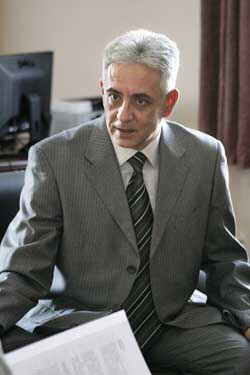 Appointment of the Inspector General of military security services is a new step in strengthening of democratic civilian control and confirmation of acceptance of generally adopted democratic standards in the modern world. Legal regulation of the function of the Inspector General established a legislative and institutional framework for monitoring various aspects of the work of Military Security and Military Intelligence Agencies, primarily legality and regularity in the work of these agencies and their members.
 Half a year on the new duty is the motive to talk with the Inspector General on the initial results, relation to the leadership and members of the military security services, always intriguing secrecy in their work, but also the importance of supervision and control of all security sector entities possessing powers which could potentially endanger rights and freedoms of citizens.
Mr Banovic, it is for the first time in the defence system that we have the Inspector General for security services. How this function enhances the democratic civilian control?
- I must emphasize that I am professionally very pleased that the Law on Military Security (VBA) and the Military Intelligence Agency (VOA) set up the function of the Inspector General for the military security services. Since I have always in my professional career advocated for more comprehensive monitoring and control of all security sector entities that have the powers which could potentially endanger the rights and freedoms of citizens, the introduction of the Inspector General of VBA and VOA is a confirmation of these efforts of mine.
However, there is no doubt that this institutionally supplemented and completed the system of democratic civilian control. Inspector General for the services in our system is a combination of external and internal executive civilian control of military security services. He is appointed by the government upon the proposal by the Minister of Defence with the opinion of the National Security Council. For his work he reports to the Minister of Defence, but he submits the report at least once a year also to the relevant committee of the National Assembly.
What is the scope of your work?
- The scope of my work is prescribed by the Law on VBA and VOA and the Work Regulations of the Inspector General. The Inspector General shall monitor the implementation of the principles of political, ideological and interest neutrality in the work of VBA and VOA and their members, monitor the legality of the use of special procedures and measures for the secret gathering of information, control the lawful use of budget and other assets, gives his/her opinion on draft laws, other regulations and by-laws under the competence of VBA and VOA, establish facts on the perceived illegality or irregularity in the work of agencies and their members and report to the Minister of Defence on the monitoring results and propose measures.
In addition, it is stipulated that every member of the VBA and VOA who came to the conclusion that in the work there has been a violation of constitutionality and legality, human rights and freedom, professionalism, proportionality in exercising the power and political and ideological neutrality, or when they consider that because of these violations their rights in the performance of duties and tasks were endangered his may address directly the Inspector General. At the end, every citizen who believes that their individual human rights or freedom were violated or denied by act or action of VBA and VOA, to protect their rights, they may address the Inspector General.
What are the experiences after six months of work? What were you involved in the most and how do you assess the cooperation with the military security services?
- Six months is rather short period for a serious summarizing the results of work, especially because it is a function that was established for the first time in the defence system and we really started from scratch. Organizational unit was formed to carry out research and analytical, technical and administrative duties of the Inspector General and its completion is underway.
In the meantime, I have dealt with general reviewing of the organizational structure and functioning of VBA and VOA, in particular with the legal framework for their work and for my work, as well, which is governed by the Law on the foundations of organisation of the security services and by the Law on VBA and VOA, and completed by passing a number of by-laws within the competence of both agencies.
In that sense, I have already been able to give my opinion and suggestions to improve several by-laws enacted since my taking office, and the work in this direction is continuous and applies to regulations that are already in force. Cooperation with both agencies is now at a very high level and in this respect I can only commend both the leadership and the members of VBA and VOA. Indeed, I have not come across any obstacles in my work so far.
Based on initial findings, are the position and the role of the Inspector General legally well set up?
- The answer to this question cannot be unambiguous. Certainly, the scope of the work of the Inspector General covers the key things in monitoring and control of the security services. Comparative experiences are very different and it is almost impossible to single out one, widely accepted, model. Powers of the Inspector General are not operational, control, but supervision, and reports on monitoring the proposed measures submitted to the Minister of Defence and the annual Board of the National Assembly.
The very existence and powers of the Inspector General have preventive effect, while control is performed only in relation to that activity of the agencies which is completed. However, one should bear in mind that democratic civilian control of the security system includes a variety of state and social entities of supervision and control and that the Inspector General is only one of the unavoidable subjects.
What were your first reactions to the proposal to be an Inspector General? To what extent has your previous work experience recommended you for the new responsible duty?
- In a professional sense, I was honoured, especially considering that this function has been established for the first time in the reformed defence system of the Republic of Serbia. In other words, for me this is a great professional challenge and responsibility.
I have been working in the security system for over twenty years, mainly designing and directly working on education and training of personnel for the security system. I was a professor, deputy director and director in the Police College and now a professor at the Law Faculty in Kragujevac and Belgrade Faculty of Security, with the subject matter of criminal law and criminal science.
I am the author a number of scientific papers, monographs and textbooks in this area.
To what degree the confidentiality in the work of the security services is an obstacle in performing your job?
- Confidentiality of work, particularly confidentiality of special procedures and measures for data collection, represents something without which it is impossible to imagine modern security services. However, confidentiality does not preclude compliance with regulations and standards of basic human rights and freedoms in the process of approving and implementing procedures and measures. The restrictions for the Inspector General regarding the access to information and documentation are related to the ongoing actions and the identity of collaborators and members of agencies working under the concealed identity. This is consistent with the model of subsequent surveillance conducted by the Inspector General in our system.
Are you satisfied the prescribed mechanisms for the removal of the identified gaps and possible illegal activities and does it work in practice properly?
- In general, I am satisfied, considering the established model and the achieved level of democratic civilian control of security services in our country. The powers of Inspector General are not executive, but the impact on the improvement of regulations, pointing directly to the management of the agencies at the irregularities in the work, proposing to the Minister of Defence concrete measures to eliminate any illegality or irregularity, reporting to the committee of the National Assembly, informing the public about the results of the work, are the mechanisms that may be very effective. For the time being, only a part of the mechanisms is applied and I am pleased how it works.
What initial results would you distinguish and what will be the priorities in your future work?
- The main result that I would distinguish is that the function of the Inspector General not only practically come to life in our defence system, but that it was accepted in this system, especially in the VBA and the VOA, and among their members, as an unavoidable part of the system of supervision and control of the work. In addition, several cases of surveillance were realized, and reports with the proposed measures were submitted to the Minister of Defence.
Priority in the future work is developing the work plan for the next year and implementation of preventive surveillance activities in different organizational units of VBA and VOA by the end of this year. The focus should be on the legality and regularity of the use of special procedures and measures for the secret gathering of information and the legality of spending the budget and other resources for work.
How do you rate the established relationships with other entities of the control of the work of the security services?
- Bearing in mind how the position of Inspector General is established in relation to state authorities and other monitoring and control entities, I am particularly encouraged by the support of the Minister of Defence, as my direct superior.
With other subjects of surveillance and control I have had informal contacts, exchange of opinions and arrangements on our future communication and cooperation and, in this regard, I am satisfied. Effective monitoring and control of the work of the security services can be realised only by concerted and coordinated efforts of all relevant entities, and their mutual cooperation is a basic prerequisite for this.
Radenko MUTAVDŽIC
