01.06.2011.
Interviews with General Miletic and General Abriel on the occasion of the upcoming Strategic Military Partners Conference to be held in Belgrade
General Miloje Miletic, Serbian Armed Forces Chief of Staff
Confirmation of a reliable partnership
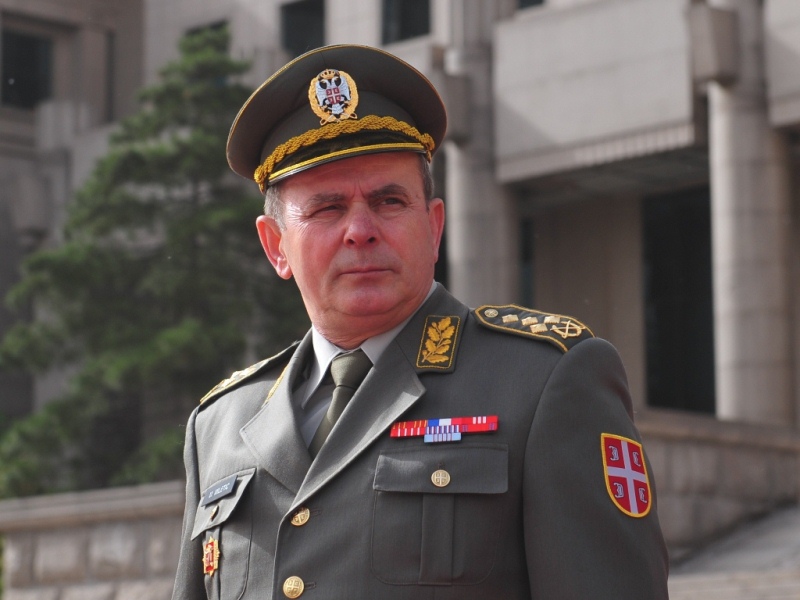 The objectives of the forthcoming Strategic Military Partner Conference are deepening and expanding partnership, cooperation and trust, and exchange of opinions, knowledge and experiences on the most current strategic and security issues. For us, this is one way to express our determination of willingness to cooperate, when it is in the interests of peace, while respecting our commitment to military neutrality.
From 13 to 15 June, Belgrade will host the Strategic Military Partner Conference, the fifth in the row since the initiative has been launched at the 2006 NATO summit in Riga, to hold such annual meetings of Partner countries around the world, gathered in several organizations, programmes and initiatives, with the common objective to share positions and experience in military matters relevant to the global and regional security, to promote cooperation among the countries dedicated to peace and building a safer world.
So far expressed interest in the conference in Belgrade is significantly higher than in the previous such gatherings. This is confirmed by the fact that the number of the registered states has already passed fifty, which is more than the total number of participants in the last conference in Finland.
These meetings are held at the level of CHODs of the participating states, and the host of this year's Conference is General Miloje Miletic, the Serbian CHOD. It is the reason to talk about objectives of the Conference, expectations of such a high-level gathering and current issues of international military cooperation of Serbia.
General, to be a host of the Strategic Military Partner Conference is a recognition of Serbia and Serbian Armed Forces, and proof of good partner cooperation, but also a great obligation in organizational terms. How are the preparations and how did it happen that we are hosting this event?
- Serbia has accepted the offer of the Allied Command Transformation from Norfolk (USA), to host the Strategic Military Partner Conference this year. This is certainly a proof of good partner cooperation, trusted partnership with all who share similar security values, but of course a big obligation in organizational terms.
Preparations are going well and I am confident that we will be good hosts, as always. Before Serbia, the hosts of this meeting were Macedonia, Norway, Albania and Finland last year. Next year, the Conference will be held in Croatia and in 2013 in Sweden.
The idea of organizing this kind of meetings at the annual level came at the Riga summit, in 2006, with the goals to enable CHODs of partner countries to share their views and experiences on military issues of strategic importance for the security of the world.
As you can see, the emphasis is on partnership, and so far the hosts of this gathering were the countries that are members of the Partnership for Peace.
The local public does not sufficiently understand the nature of this conference, and it is often called the NATO Conference. Could you tell us something about the nature and purpose of the upcoming meeting?
- This is a conference attended by all countries that in some way participate in the Euro-Atlantic and European integration and are in partner relations in the field of defence. So, there are not just NATO Members, but also the countries participating in the Partnership for Peace Programme, Mediterranean Dialogue and the Istanbul Initiative. The Conference will gather representatives of the contact countries such as Brazil, Australia, India, Japan, New Zealand and Pakistan.
The conference invites Chiefs of Staffs of these countries, which clearly shows that the professional, not the political dimension of the conference is predominant. The objectives of these conferences are to deepen and expand partnership, cooperation and trust, then to exchange opinions, knowledge and experiences on the most current strategic and security issues.
For us, this is one of the ways to show our determination of willingness to cooperate, when it is in the interest of peace, while respecting commitment to military neutrality.
The conference is a new step for Serbia and the Serbian Armed Forces in developing partner cooperation with all who advocate for the preservation of peace and security and countering threats wherever they come from. How do you assess building of our partner capacities, since it has been recently paid more attention than before?
- Serbian Armed Forces fosters good cooperation and is very active in all areas in which it recognizes its interest. These are, primarily, joint training and staff development, participation in exercises, modernization of arms and military equipment, regional initiatives in the field of security ...
In addition, we are recognised in the region and in the world as a reliable partner who has a lot to offer.
Our current priorities are training of the units declared to participate in multinational operations, active operation in full capacity of the regional CBRN centre in Krusevac and development of the "South" Base capacities for the purpose of training participants in multinational operations.
Of course, there is also participation in multinational operations under UN and EU mandate in the areas where peace and security are endangered. We have increased the number of missions in which our members are engaged. At the moment we are present in Congo, Liberia, Ivory Coast, Cyprus and Lebanon. Participation in operations in Somalia and the Middle East has been planned.
You have recently come back from a multi-day visit to China. What are the results of that visit and what is the orientation of Serbia in international military cooperation?
- During the visit to China, I had several important meetings with senior representatives of the Ministry of Defence and People's Liberation Army of China, with whom I exchanged views on improving cooperation between our two militaries. I talked with People's Liberation Army Chief of General Staff General Chen Bingde, Vice chairman of China's Central Military Commission Xu Caihou, and Defence Minister Liang Guangli. They all pointed out that the exchange of experiences and cooperation between the two armies is fruitful in various fields and have assured me that China has positive attitude toward further improvement of military cooperation with Serbia.
Traditional friendship with a great and prosperous country such as China, which has one of the strongest armies in the world, for Serbia and the Serbian Armed Forces is precious. In the last few years, our cooperation in defence has an upward trend, especially when it comes to military education and military medical cooperation.
The Serbian Armed Forces, above all, builds bridges of cooperation in the field of defence with the armies of the countries with which the Republic of Serbia developed good, friendly and partner relations, in order to strengthen peace and security in the region and beyond. It is for this reason that cooperation and partnership with Ohio National Guard based on the State Partnership Programme, intensified cooperation with the Russian Federation, maintenance of the established dynamics of cooperation with China, further intensification of cooperation with neighbours and with the armed forces of the countries in the region, are significant.
Of course, what is also significant is our cooperation with armed forces of other European countries and the world, which is shown in an imposing number of activities organized and conducted with colleagues from abroad, joining forces.
General, we wish you a successful organization of the Strategic Military Partner Conference and the results which will contribute to strengthening the security of Serbia.
Radenko MUTAVDZIC
General Stéphane Abrial, Supreme Allied Commander Transformation
Partners for Better World
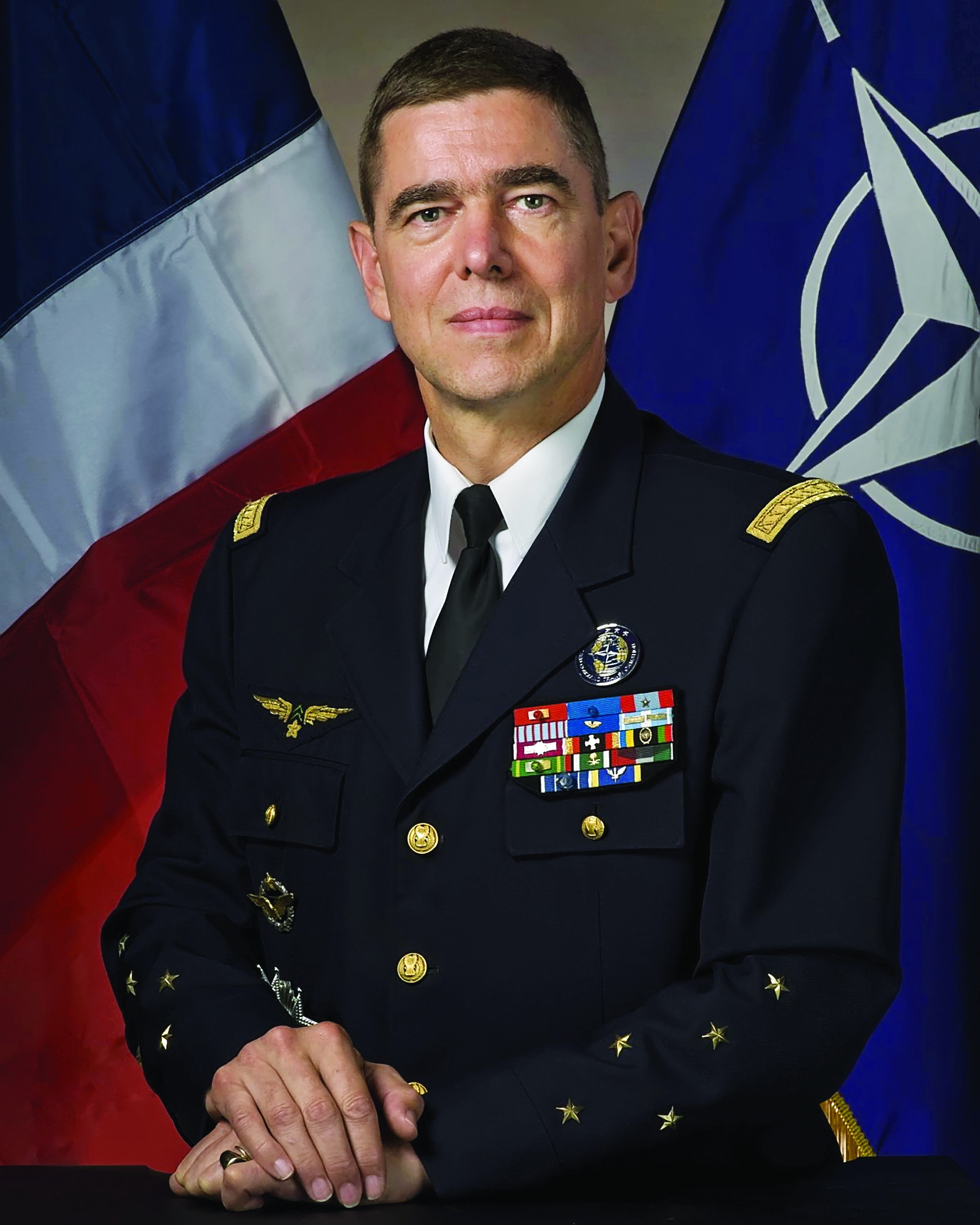 Strategic Military Partner Conference, to be held in Belgrade, from 13 to 15 June, is organized by the Allied Command Transformation (AST) and this is the reason why we asked General Abrial to answer to several questions about the upcoming event
The aim of Strategic Military Partner Conference 2011 (SMPC) is exchange of experiences and opinions about the most important strategic issues of mutual interest. Invitation for Conference was sent to the heads of staff of countries NATO, PfP, Mediterranean Dialogue, Istanbul Cooperation Initiative and the contact state. Also, an invitation was sent to the Chairman of the Military Committee European Union, the Chairman of NATO Military Committee, Director of the International Secretariat of NATO and Supreme Allied Commander for Operations.
This year's conference is "After Lisbon: implementation of transformation. "In addition, within the working groups, subject-matter experts will have the opportunity to exchange views on the following topics "Innovative approaches to effective capacity development", "Assured access to the shared global commons" and "Training, partnership and assistance."
General, what makes SMPC 2011 a key event within the Allied Command Transformation Strategic Engagement Campaign?
- Strategic Military Partner Conference is a unique and suitable platform that brings together the top military representatives of both NATO Members and Partners, what allows discussion on key activities that Allied Command Transformation (ACT) realises with these countries and that these combined attitudes and perceptions of individual countries assist in their efforts to conduct NATO transformation. Last November, at the Lisbon summit, NATO reaffirmed its commitment to transformation as a fundamental element of the future of the Alliance. As a contribution to this, the first priority of ACT is to provide broad understanding of the current evolution of warfare, and second, how to respond to these changes. The best way how to do this is to evaluate our present security environment in a clear and meaningful way. In doing so, we will develop pragmatic and innovative proposals for strengthening our capacity for collective security and defence. Enhancing stability and security cannot be successful without our partners. The New Strategic Concept recognized the importance of this contribution and called for greater cooperation and exchange with partners around the world.
The conference consists of two main parts. The first day CHODs will meet, and after that the planned workshops will be conducted. What are the main points of these two activities?
- At the plenary session of CHODs, we will discuss the innovative approaches to effective capacity development, future development of partnership and joint activities, and ensuring access to global common goods. Combining information from ACT with presentations of high-level keynote speakers, we hope that we will stimulate a fruitful and meaningful discussion at the CHODs' Plenum. At the workshops which will follow after that, national experts and experts from ACT will thoroughly address these issues in a constructive way, which will enable our analysts to present to NATO the established recommendations for the future work. All the results will be aggregated in the follow-up analysis of the work of SMPC and I will forward that report to all NATO structures as well as to our partners.
The partnership is very important for global and national security. How do you see its future development and efforts directed towards transformation?
- Over the past two decades, NATO has cooperated with partners in building of cooperative security. The results have confirmed the value and importance of that broad cooperation. Partnership with NATO can provide a clear and valued contribution to security of the Alliance and beyond, to international security, as well as to defending and promoting the values of personal freedom, democracy, human rights and the rule of law. Relations with partners of the Alliance are based on reciprocity, mutual benefit and mutual respect.
This goal of this policy is essential deepening and expansion of partnerships with NATO, in accordance with the Strategic Concept 2010 and decisions made at the Lisbon Summit, and strengthening of the efficiency and flexibility of partner countries. This will increase the contribution to the Euro-Atlantic and international security in the 21st century. This policy ensures that the partners have a more complete role than ever before in development and implementation of cooperative activities and approaches – with NATO and between them.
The basic principles and objectives will continue to be valid. All partners will be offered significant political and practical engagement in accordance with their individual needs, circumstances and aspirations. This offer includes: improving political consultations on security issues common interest, strengthening of practical cooperation and support to military education, training and capacity building with the resources that are available.
What are your expectations from the conference in Belgrade?
- SMPC is a suitable platform for NATO Members and Partners – it allows them to exchange national views on the most topical strategic issues. With that in mind, I expect interesting and fruitful discussions which showed in the past to have fundamental importance for our ability to offer new ideas, perspectives and views. Incorporating national positions we improve these results, while strengthening mutual understanding and acceptance at the same time.
General Abrial, you are the first European to be appointed for the permanent commander of a NATO strategic command. After two years in office of the Supreme Commander of the Allied Command Transformation, what would you say, what were your biggest challenges so far?
- I would say that the transformation is a challenge in its very nature. It is a process and it is not a matter of execution a major reform, but of constant improvement and adjustment of our military assets to our needs. There should be ensured that the transformation is fully based on reality and that our forces are built on an overall level of ambition that can be maintained.
One of the most difficult challenges is to overcome the current problems. You can say that it is always a challenge. But it is today perhaps more so than in the past, mainly from two reasons. First, the transformation is carried out under pressure of current operations that require a lot of human and financial resources, and second, the transformation is being implemented within the budgetary constraints faced by our countries and NATO as an organization. We all know that the increase in our total spending on defence is not a question which is now on the table for consideration, and will not be in the foreseeable future, unless there are great geopolitical shocks which are not wanted by anybody.
However, it should be seen as an opportunity. We have already been engaged in the process of fundamental reform. Our NATO command structure that employed 27,000 people in 1995 has now been reduced to 13,000 – and we are on the way to lower this number below 9,000. However, for NATO it is not enough if it costs less. The Allied Command Transformation is also engaged in assisting Member States so that every dollar or euro allocated to defence is better invested, tirelessly searching for more efficient and cost-effective solutions which will benefit both our Members and Partners.
R.MUTAVDZIC
Cooperation with Serbia
Answering the question on cooperation between NATO and Serbia, General Abrial pointed out the readiness of the Alliance to further develop an ambitious and meaningful relationship, while respecting Serbian policy of military neutrality.
In his opinion, cooperation with Serbia in the framework of the Partnership for Peace Programme is very productive for both sides, and defence and security sector reforms are the key elements of cooperation. As particularly important, he singled out the work of the Serbia-NATO Defence Reform Group, which was formed in February 2006. to provide advice and support to the Serbian authorities in the reform and modernization of the Serbian Armed Forces and in building a modern, cost-effective defence structures.
General Abrial mentioned also the support to a number of NATO and PfP funds for projects in Serbia, such as safe destruction of land mines and ammunition and providsion of funds for the retraining of former members of the Serbian Armed Forces.
Within the framework of "Science for Peace and Security" Programme, Serbia received donations for a number of cooperative projects, and these include also studies to reduce seismic risks and workshops for the future regional cooperation and the fight against terrorism. Key areas for development could be further issues of regional security and initiatives to protect the environment.
