14.04.2013.
Media and Regional Security Challenges
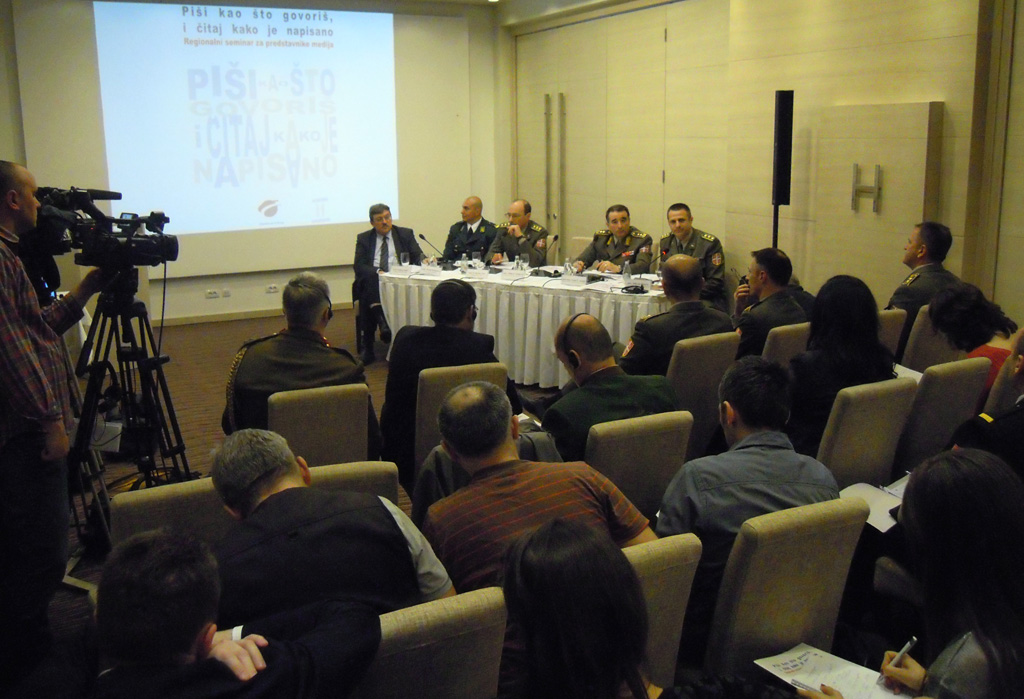 During the two days of work in the seminar in Ruma, which was organised by the Atlantic Council of Serbia for representatives of press and electronic media in the region, a number of specific issues were also addressed such as reducing the risk of corruption, standardization and codification, participation of Serbia in international military engagements, asymmetric threats, countering regional security threats, strategic and crisis communication and the role of media in conflict, reconciliation and integration processes.
These topics were addressed by representatives of the ministries of defence, armies, and academic institutions of the countries from the region and NATO, who took part in the seminar along with military-diplomatic representatives of a number of countries that support projects for the reform of defence system and the Serbian Armed Forces. The facilitator was Predrag Simic, PhD, professor at the Faculty of Political Sciences in Belgrade.
On the first day of the seminar, the discussions were held about foreign and defence policy of Serbia and the region within the Euro-Atlantic cooperation between Serbia and NATO within the Partnership for Peace, the international military cooperation in the Euro-Atlantic framework and partnership programmes and initiatives, and the basic message is that Serbia is a partner in the security cooperation based on equality, with a view to improving regional and European stability and the maintenance of peace in the world.
 In continuation of the work, the representatives of the Ministry of Defence and the Serbian Armed Forces explained the key processes by which Serbia wishes to contribute to the regional and general security. What is most important is the participation of the Serbian Armed Forces in peacekeeping missions, which was addressed by Colonel Milivoje Pajovic, Head of the Peacekeeping Operations Centre. He underlined the high professionalism and contribution currently provided by 113 members of the Serbian Armed Forces to the eight peacekeeping missions, whereas by the end of the year, up to 474 participants will be deployed plus 13 participants planned for the mission in Mali. The most important increase will be seen in the mission in Lebanon in November where an infantry company will be deployed instead of the current platoon, then deployment of special forces members to the mission in Somalia for the protection of ships from pirate attacks, as well as sending medical teams with four members to EUTM Somalia in Uganda where we now have one representative.
The progress of the Serbian Armed Forces in implementing the Operational Capabilities Concept was addressed by Major General Vojin C. Jondic, Chief of Operations Department of the General Staff and Colonel Milorad Vidakovic from the Planning and Development Department of the General Staff. The main objective of this process is to improve the interoperability of the declared units, motorised infantry company and military police and CBRN platoons, for the participation in peacekeeping operations.
Colonel Slavisa Ciric spoke about the experiences from three medical missions in which he participated: in Congo, Chad and Uganda, noting that the military medical corps has a respectable capacity confirmed in the current rotation of 20 medical teams in Congo, joint work in the Norwegian military hospital in Chad and managerial position of the Serbian military doctors in the medical element of the mission in Uganda.
The importance of codification and standardization in the Serbian Armed Forces was addressed by Brigadier General Bojan Zrnic, PhD, Chief of Defence Technology Department. Uniform naming, grouping and assigning a codification number to every peace of military equipment and spare parts is the prerequisite for the logistics interoperability and efficiency, and the benefits are avoidance of unnecessary stockpiles and development of competitiveness of the domestic defence industry.
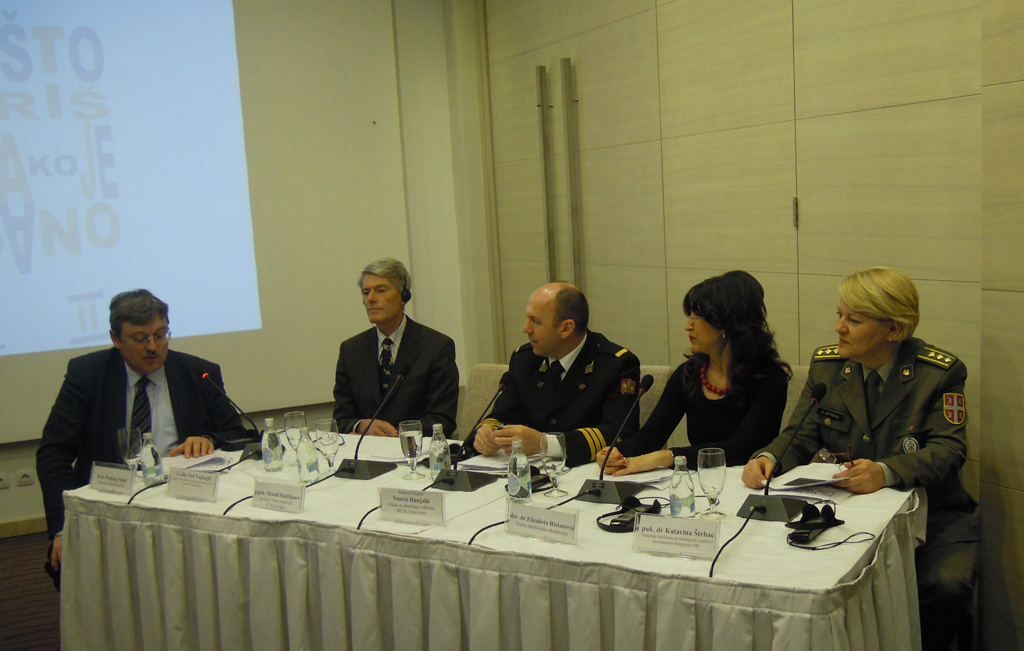
 Asymmetric threats marked the security set of issues worldwide, Colonel Catarina Strbac from the Strategic Research Institute emphasized in her speech. There is no country that can cope alone with organised crime, terrorism, corruption, various forms of extremism, environmental and demographic challenges, and other asymmetric threats; facing these threats requires cooperation and coordinated action.
Various aspects of bioterrorism, as a global problem, risk and challenge, were addressed by Elizabeta Ristanovic, PhD, from the Military Medical Academy. She pointed to the dangers of biological weapons, but also to an inadequate national strategy and an under-developed awareness of that danger. With simple and inexpensive production and the possibility of hidden but effective application, it is possible to produce serious consequences, where, for example, the release of 100 kilograms of anthrax spores in the form of aerosol in the city of five million inhabitants could cause death of up to three million people, which is the equivalent effect of the hydrogen bomb!
The activities of Serbia in reducing the risk of corruption within the NATO Building Integrity Initiative were addressed by Milan S. Milutinovic from the Defence Policy Sector. He mentioned the NATO assessment that Serbia was an example of commitment to good practice that sends a strong message to other countries in South East Europe to strengthen transparency, accountability and integrity in the department of defence and security sector.
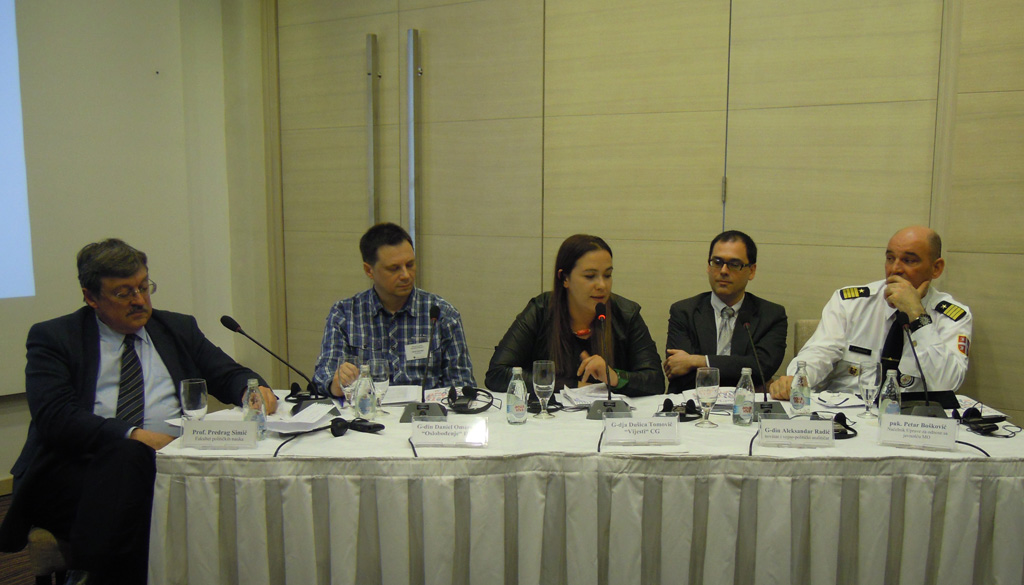
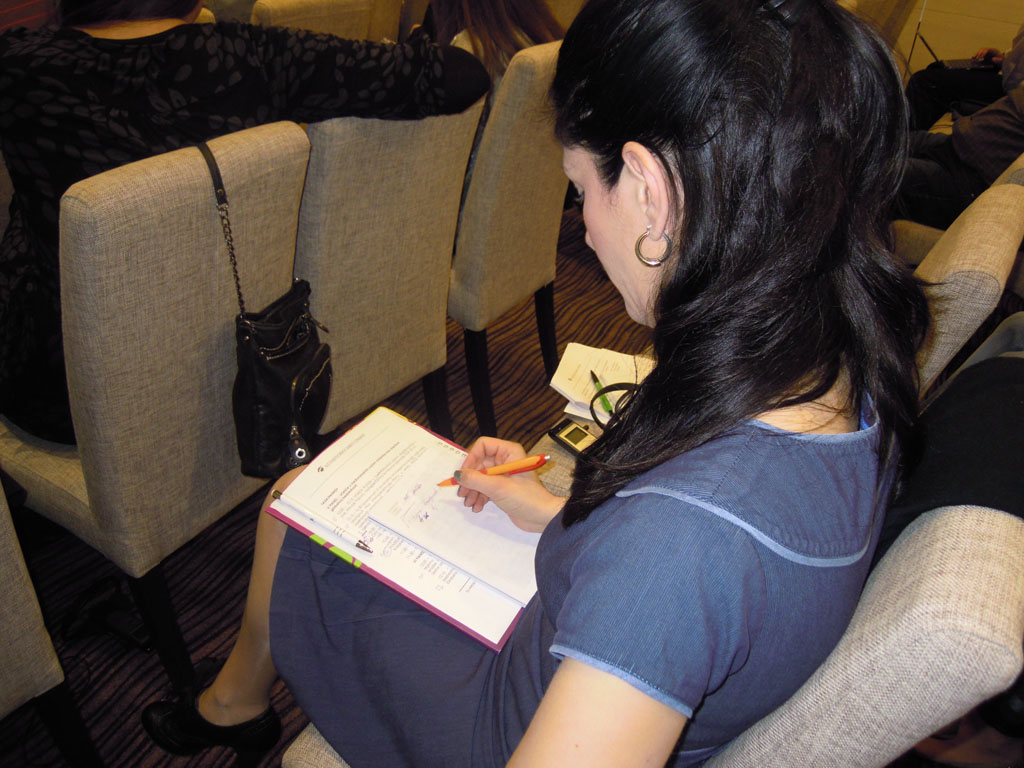 At the end of the seminar, discussion was held about the media image in the region and reporting on security and military issues. The speakers were Colonel Petar Boskovic, Head of Public Relations Department, Aleksandar Radic, military-political analyst, and journalists Dusica Tomovic from "Vijesti" of Podgorica and Daniel Omeragic from "Oslobodjenje" of Sarajevo.
The participants of the seminar concluded that this gathering, just like the last year's gathering of the representatives of the media in the region entitled "Write as You Speak and Read as it is Written", was an excellent opportunity to exchange information on common security issues and the improvement of journalism practices to better recognise significance of security and military issues for a more stable and prosperous region of the Western Balkans and Eastern Europe.
