


13.09.2026.
Joint Tactical Live-Fire Exercise Victor 2026 held
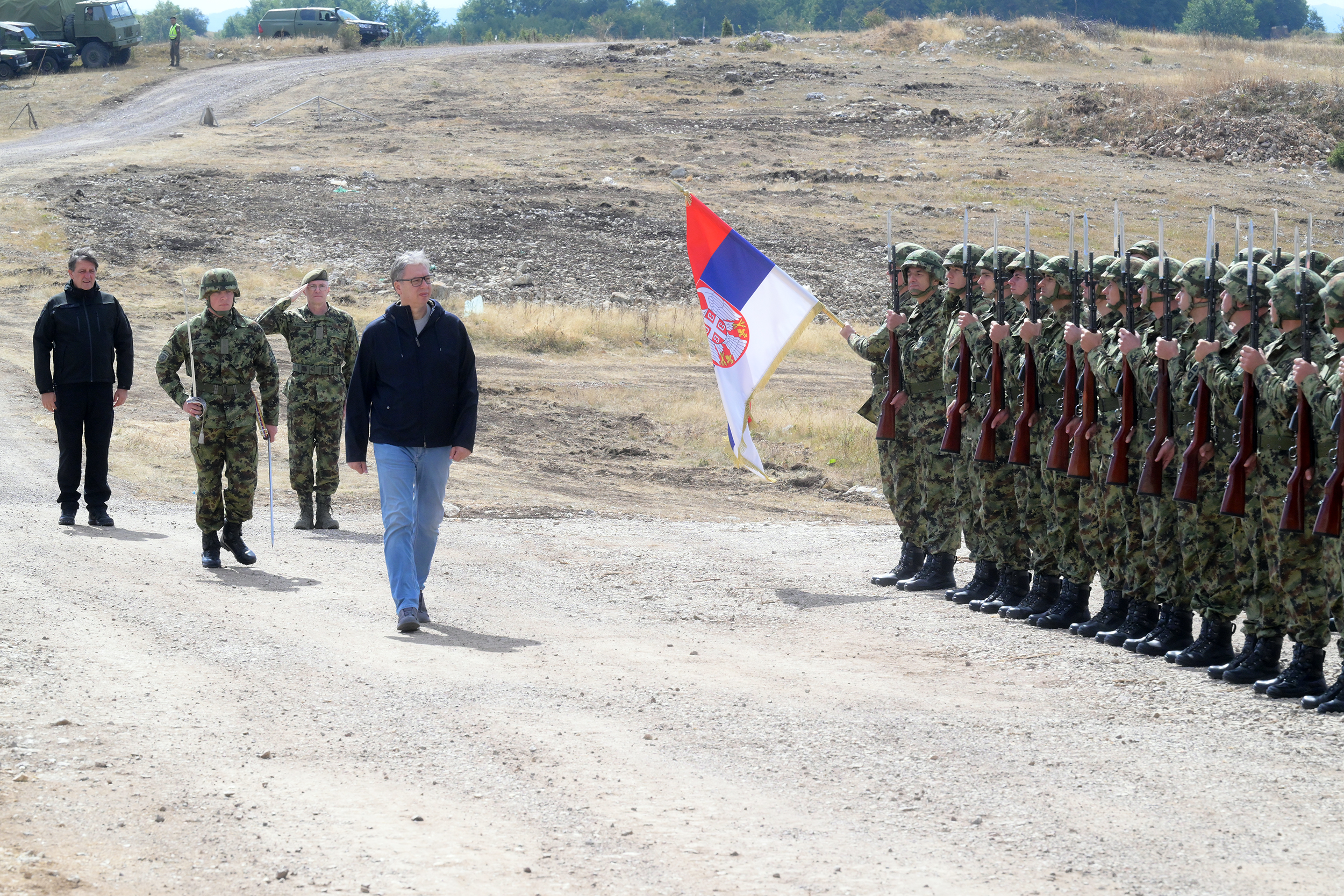
The Distinguished Visitors’ Day at the Joint Tactical Live-Fire Exercise Victor 2026 was held today at the Pešter temporary training area. It was attended by the President of the Republic and Supreme Commander of the Serbian Armed Forces, Aleksandar Vučić, Minister of Defence Bratislav Gašić, and the Chief of the Serbian Armed Forces General Staff, General Milan Mojsilović.
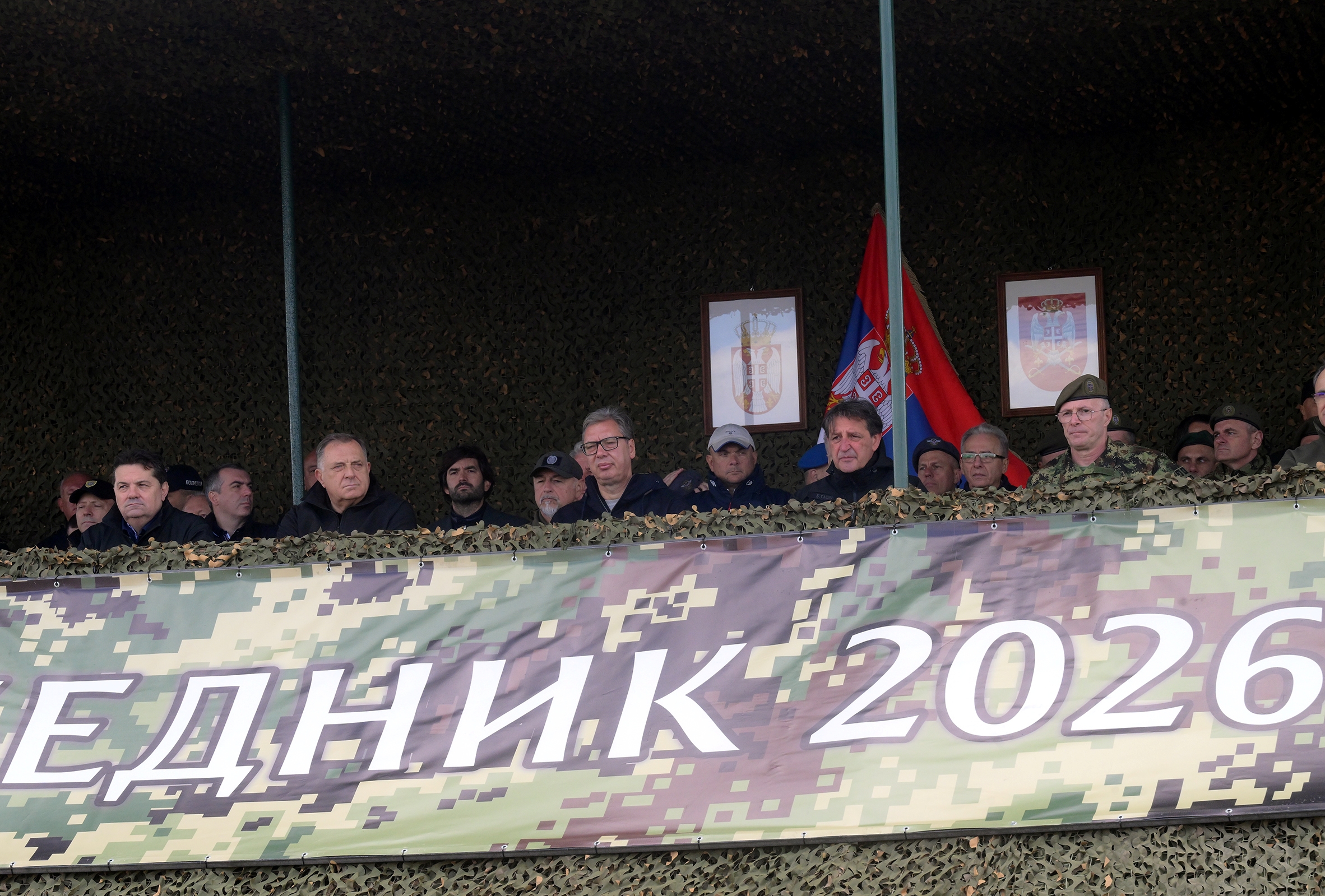
 Also in attendance were the Prime Minister of the Republic of Serbia, Đuro Macut, the Speaker of the National Assembly of Republika Srpska, Nenad Stevandić, the Prime Minister of Republika Srpska, Savo Minić, Serbian government ministers, and Milorad Dodik.
The Army Commander, Major General Zoran Nasković, served as the exercise commander, while the exercise director was Brigadier General Nebojša Nedeljković, Commander of the Second Army Brigade.
 The military exercise was conducted by units of the Army, Air Force and Air Defence, Special Forces and the Military Police operating in coordination. The objective of Exercise Victor 2026 was to further enhance the proficiency and readiness of commands and units for the planning and execution of combat operations, the organisation of joint action and cooperation, and force protection. During the execution of tactical and fire missions, newly introduced and modernised weapons and military equipment were employed. The exercise that demonstrated the execution of an offensive operation brought together approximately 2000 Serbian Armed Forces personnel and featured more than 500 items of key military equipment.
In line with the exercise scenario, the activities at the Pešter temporary training area began with reconnaissance of enemy dispositions and intelligence collection within the area of operation, utilising the CH-95 remotely piloted aircraft. Reconnaissance drones and multi-sensor reconnaissance platforms were used for the same purpose. To achieve air supremacy, Air Force and Air Defence troops were employed. Two MiG-29SM fighters conducted a sweep.
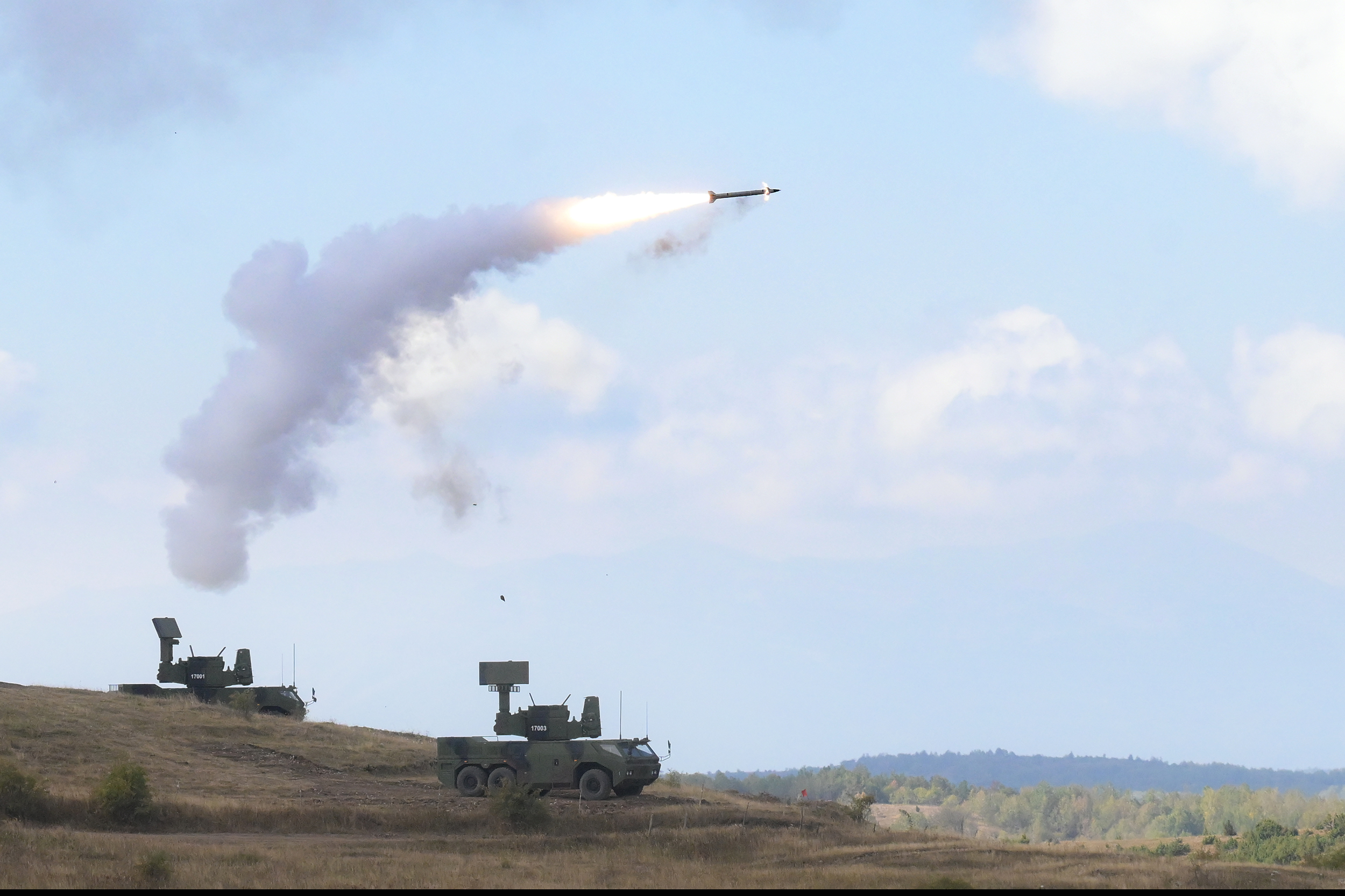 The enemy achieved a sudden breach with small swarms of drones and combat aircraft. To engage low-flying enemy targets, HQ-17AE, Mistral 3+, Strela-2М and PASARS missile systems were used, alongside the domestically developed Kobac-1 counter-drone system. To detect enemy targets, a GM-200 radar system was used.
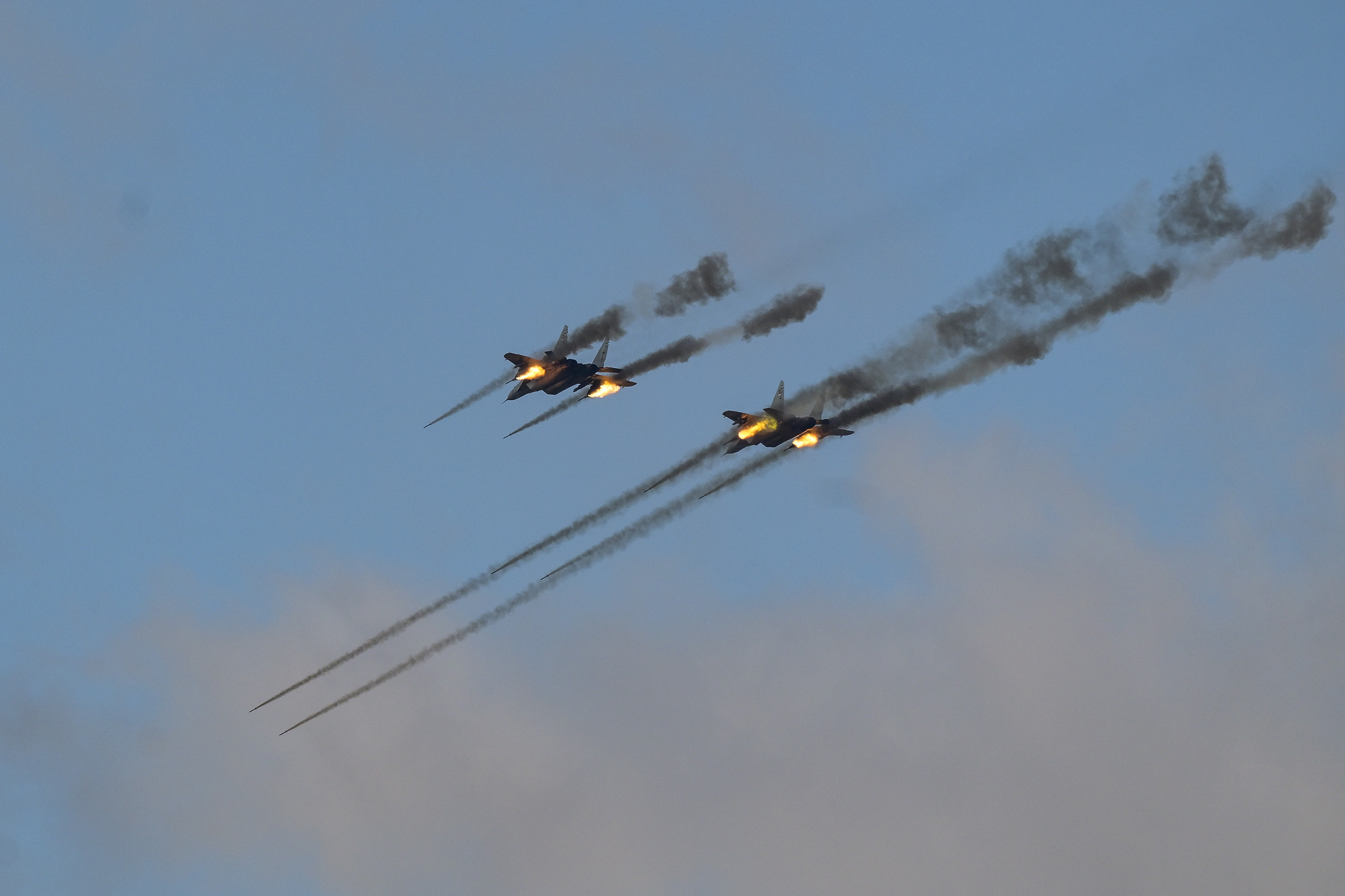
To conduct battlefield interdiction, fire support was authorised. A formation of MiG-29SM multirole combat aircraft carried out a sortie, engaging targets with 80mm unguided rockets designed to neutralise armoured vehicles. This was followed by strikes conducted by modernised Orao fighter-bombers, and subsequently, by aerial guided munitions with a high destructive power.
 To reinforce the troops, 63rd Parachute Brigade personnel were airdropped from a C-295 transport aircraft, using cutting-edge parachute systems. After the successful airdrop, the forces assembled and reorganized, before continuing activities on the ground. The reconnaissance companies were tasked with scouting the area, detecting enemy presence and ensuring the unhindered movement of the main body of the force. The troops spotted the enemy and opened fire. Once the action completed, exfiltration ensued. This part of the exercise demonstrated the employment of BRDM-2MS armoured vehicles and HMMWVs equipped with the 12.7mm DUBS weapon station, 12.7mm NSV machine gun, and the Kornet anti-tank missile system.
 Counter-drone unit protection was provided by personnel armed with SCAR L automatic rifles, fitted with the SMASH 3000 aiming system and the 40mm revolver-type grenade launcher. Sniper teams and Komarac K-2A drones engaged the spotted targets. Following the neutralisation of the enemy’s combat drones, the extraction of reconnaissance company personnel using quad bikes was conducted. The sniper pair was extracted by a HMMWV via the shortest route.
 To provide fire support to the attack, missile and artillery systems were employed, including the M24 Oganj system equipped with the ALAS missile, Perun, and Nora B-39 systems. The enemy was spotted attempting to reinforce its troops and was engaged with 82 mm mortars, 30 mm automatic grenade launchers and machine guns, while 155 mm Nora B-52 self-propelled howitzers simultaneously engaged the enemy.
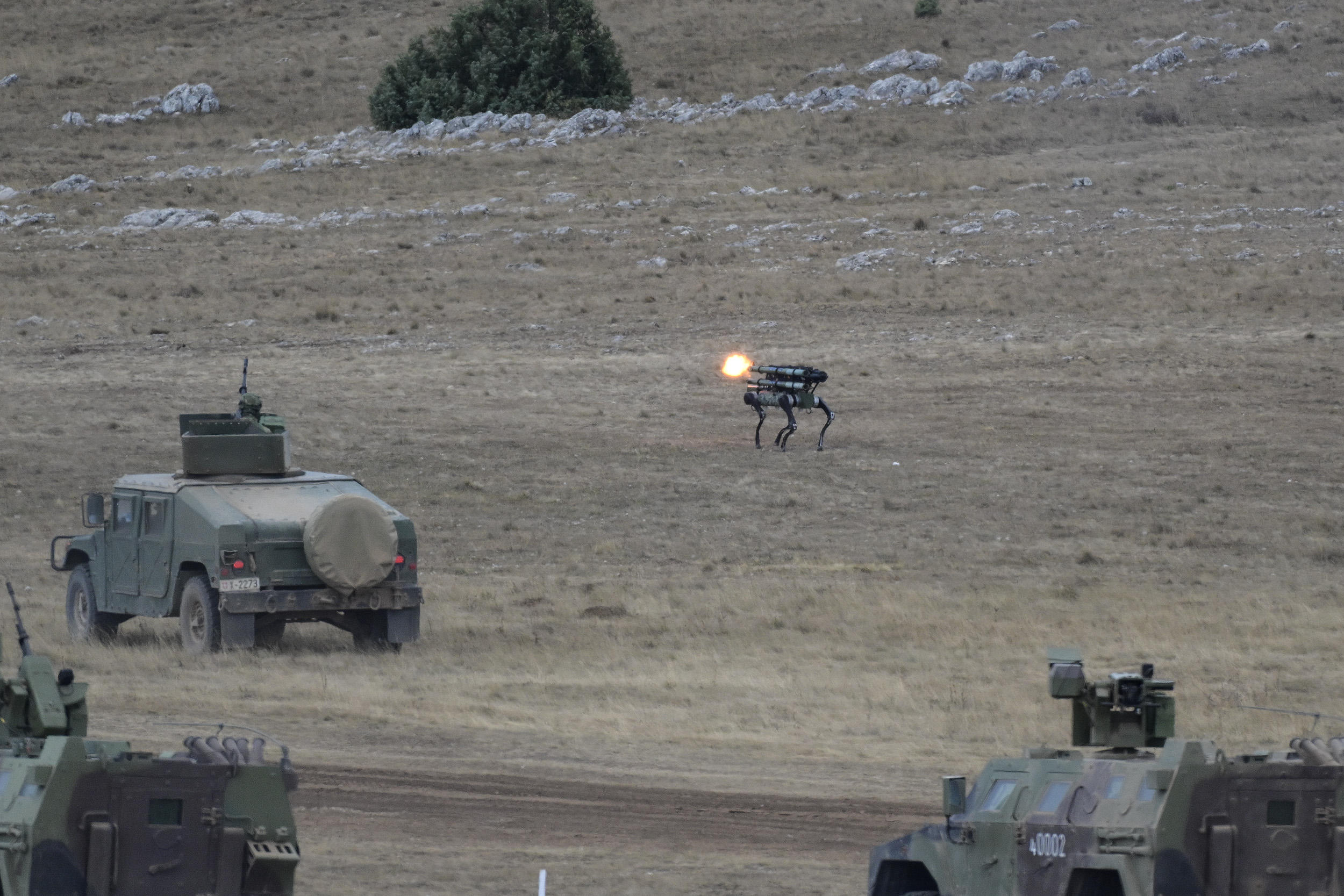
Once spotted, enemy forces were engaged using the M80 AB1v2 infantry fighting vehicle and the M-83 anti-tank launchers employing Malyutka-2F anti-tank guided missiles, as well as Kornet anti-tank missile systems mounted on HMMWVs. Upon completion of the engagement, Mali Miloš unmanned ground platforms occupied suitable firing positions to perform reconnaissance and ensure area security, which enabled operations to continue while reducing the exposure of personnel to enemy fire.
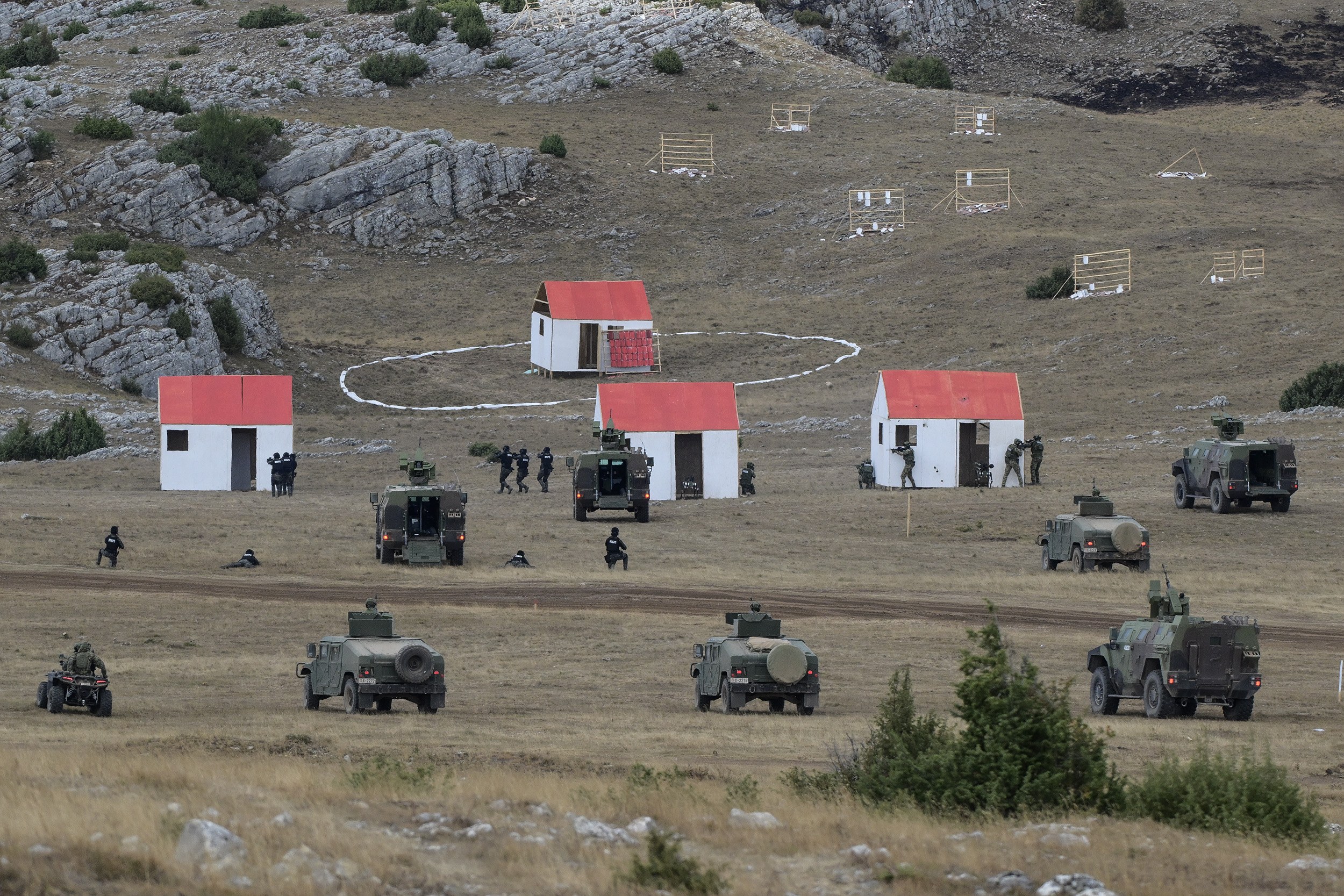
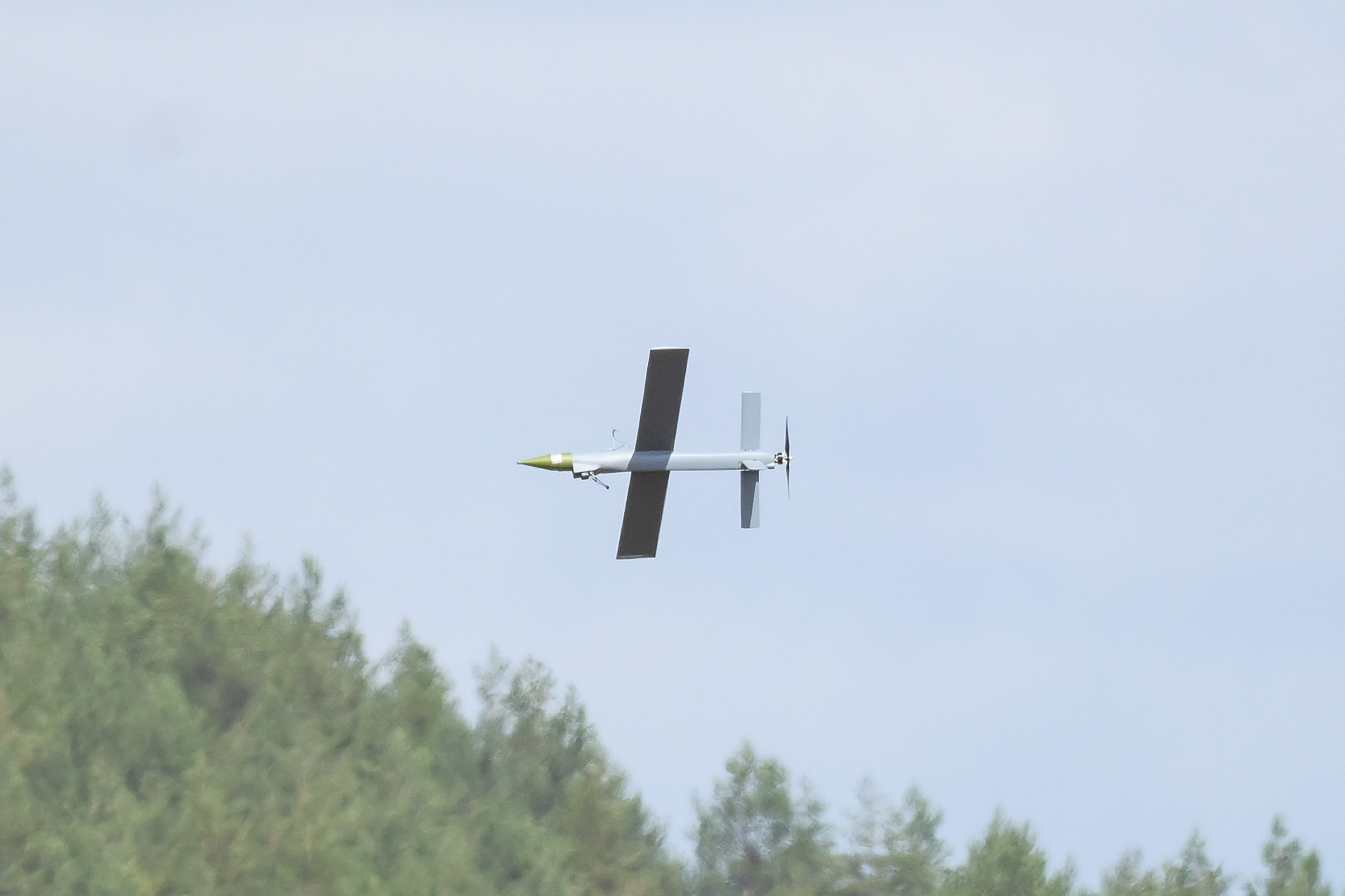 In order to neutralise the enemy in an urban area, teams from the 72nd Special Operations Brigade, the 63rd Parachute Brigade and the Special Purpose Military Police Detachment “Kobre” were committed to the fight. During this operation, particular importance was placed on the employment of state-of-the-art Mali Miloš unmanned ground systems and unmanned aerial vehicles, including Vrabac and Senka drones, designed to provide reconnaissance and surveillance. To provide fire support and other forms of support to ground forces, Osica, Komarac K-2A, Komarac K-3 and IKA Bomber were employed.
Following the employment of the unmanned platforms, special operations teams mounted on 4×4 Miloš armoured combat vehicles, HMMWVs and quad bikes approached the urban area and, in coordination with Robodogs, neutralised the targets. Following this, the special operations teams withdrew to a secure location in accordance with established safety procedures, and the reconnaissance of the enemy’s disposition was conducted using the Senka remotely piloted aircraft.
 In order to prevent enemy forces from manoeuvring and to neutralise them within the forward defence area, immediate air support was provided by Mi-35, H-145M and Gama helicopters.
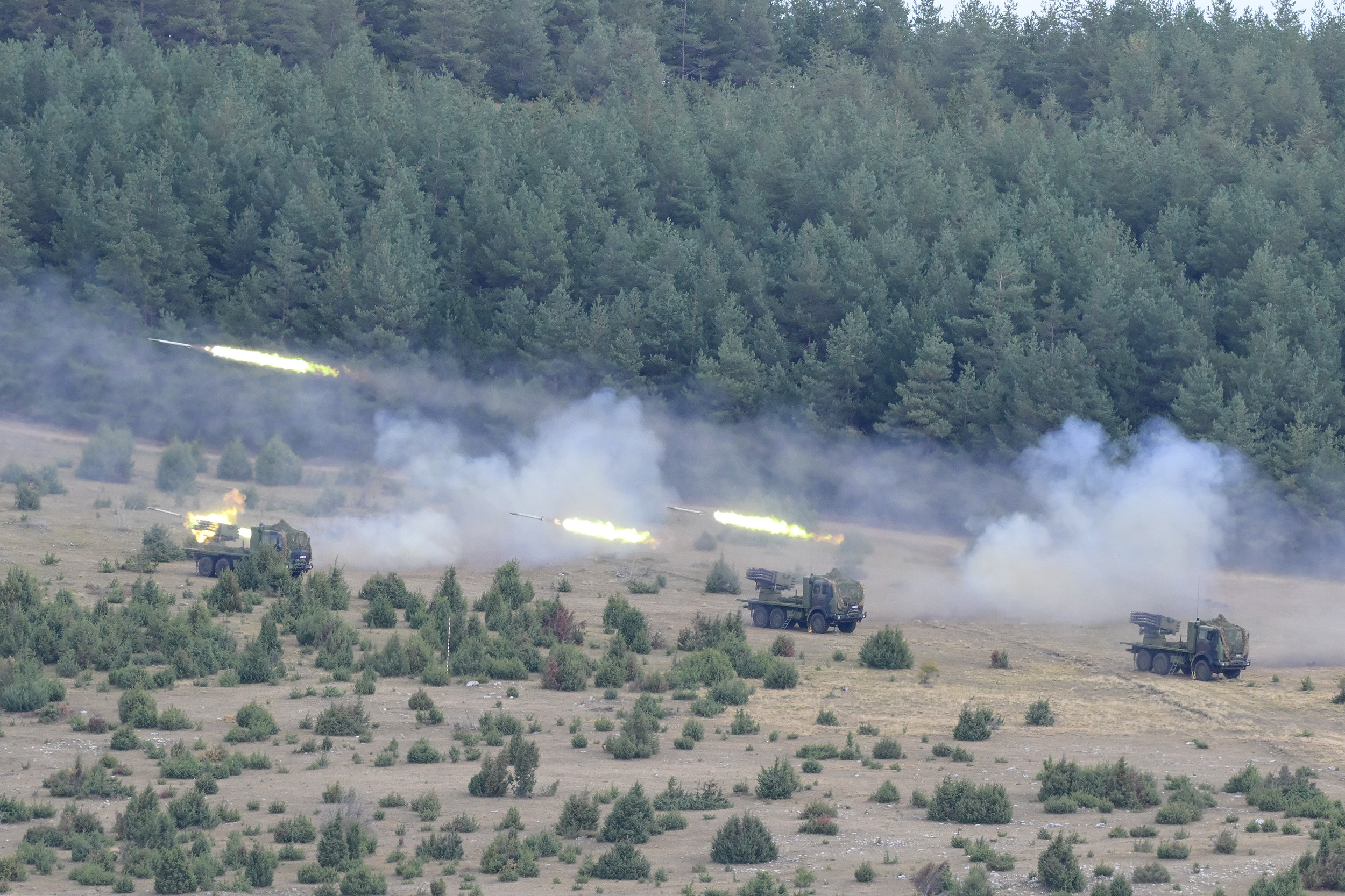
To provide air support to the attack and facilitate the advancement of the first echelon, an artillery group consisting of two batteries of 155 mm Nora B-52 self-propelled gun-howitzers and a company of 120 mm mortars delivered fire against the enemy. Enemy positions were also engaged by 128 mm M17 Oganj and 122 mm RM-70 Vampire multiple rocket launchers.
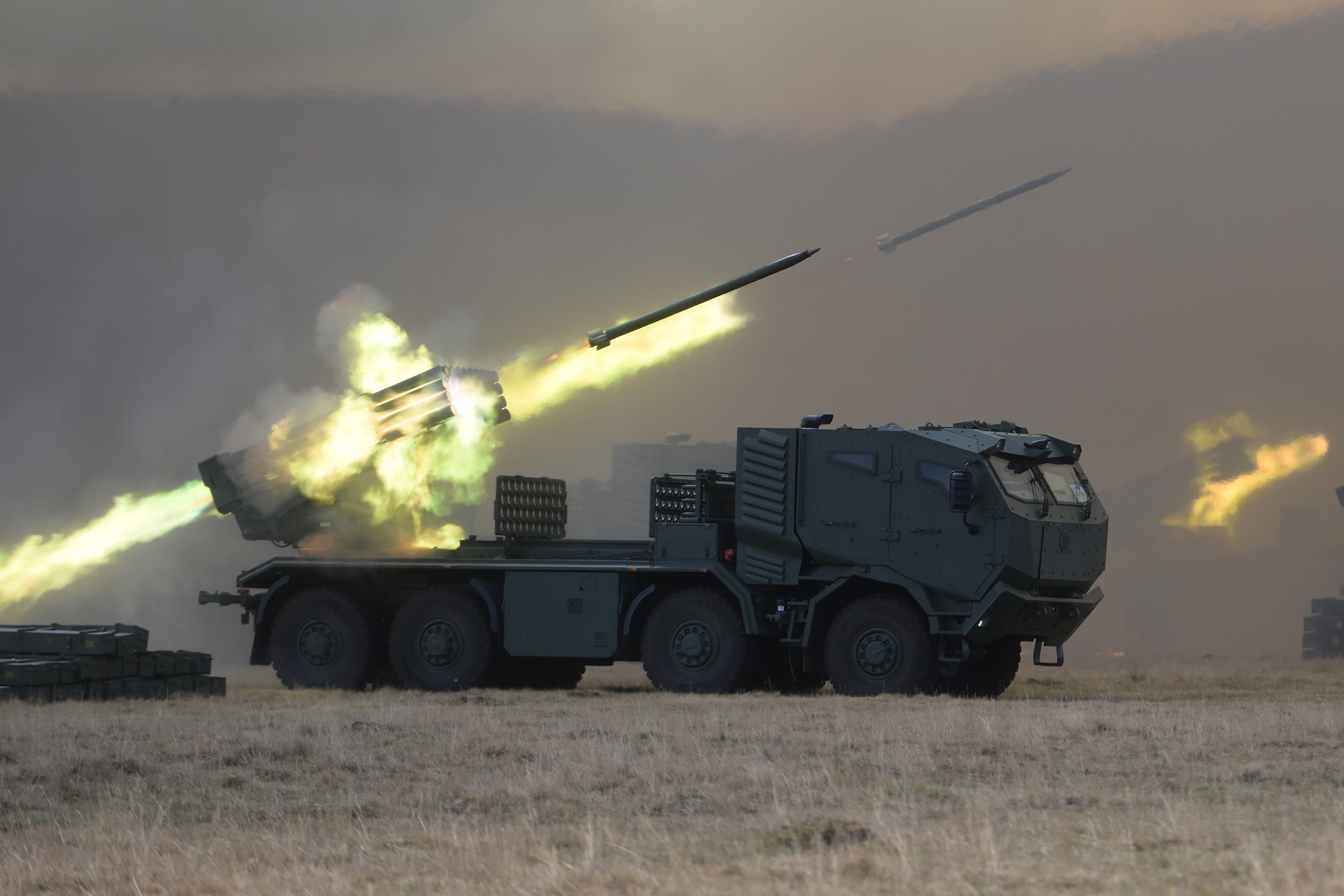 During this phase of the exercise, the PULS multiple rocket launcher, whose employment was demonstrated for the first time since its introduction into service with the Serbian Armed Forces, attracted particular attention. This is a highly flexible artillery system designed to deliver long-range fire.
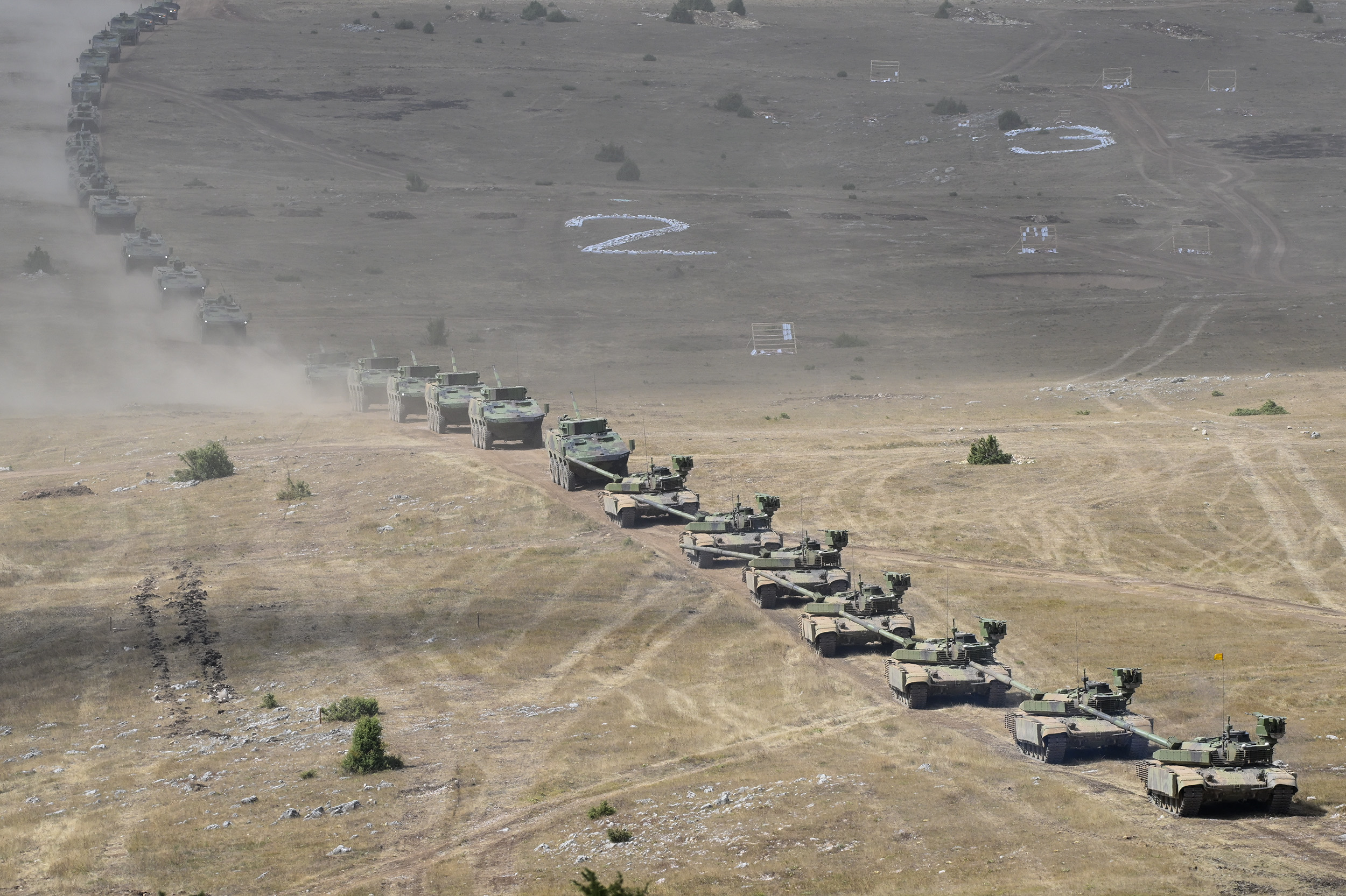
During the next phase of the exercise, an infantry platoon advanced in Lazar-3M armoured combat vehicles. Simultaneously, elements of the tactical group moved along an auxiliary axis in 30 mm Lazar-3M combat vehicles and modernised M-84AS1/2 tanks.
 As they advanced, companies of modernised tanks, infantry fighting vehicles and platoon of Lazar-3M vehicles engaged the enemy simultaneously with their weapons systems, with the aim of penetrating deep behind enemy lines and gaining superiority in the attack. M80AB1v2 infantry fighting vehicles, BOV POLO vehicles and HMMWVs equipped with the Kornet system, as well as MRAP combat vehicles, also delivered fire. Following this, the second echelon, comprising a company of BRDM-2M vehicles and a platoon of BTR M-80 vehicles, moved into the battle to reinforce the attack.
Based on his assessment, the commander made a decision to further disrupt the enemy’s disposition by employing a parachute company in the enemy’s rear area. Following this, the first-echelon continued its advance into the depth of the enemy’s disposition, while forces deployed in the isolated urban area neutralised the remaining enemy elements.
During the next phase, the personnel demonstrated the medical evacuation of casualties by both ground and air, as well as assistance to the local population in affected areas.
 Exercise Victor 2026 confirmed the high level of proficiency, readiness and professionalism of Serbian Armed Forces personnel, as well as their ability to effectively employ newly introduced and modernised equipment and weapons systems. At the same time, the personnel demonstrated a high degree of coordination and interoperability in responding to contemporary security challenges, risks and threats to the security of the Republic of Serbia.