


03.03.2026.
Minister Gašić opens exhibition at Museum of Yugoslavia
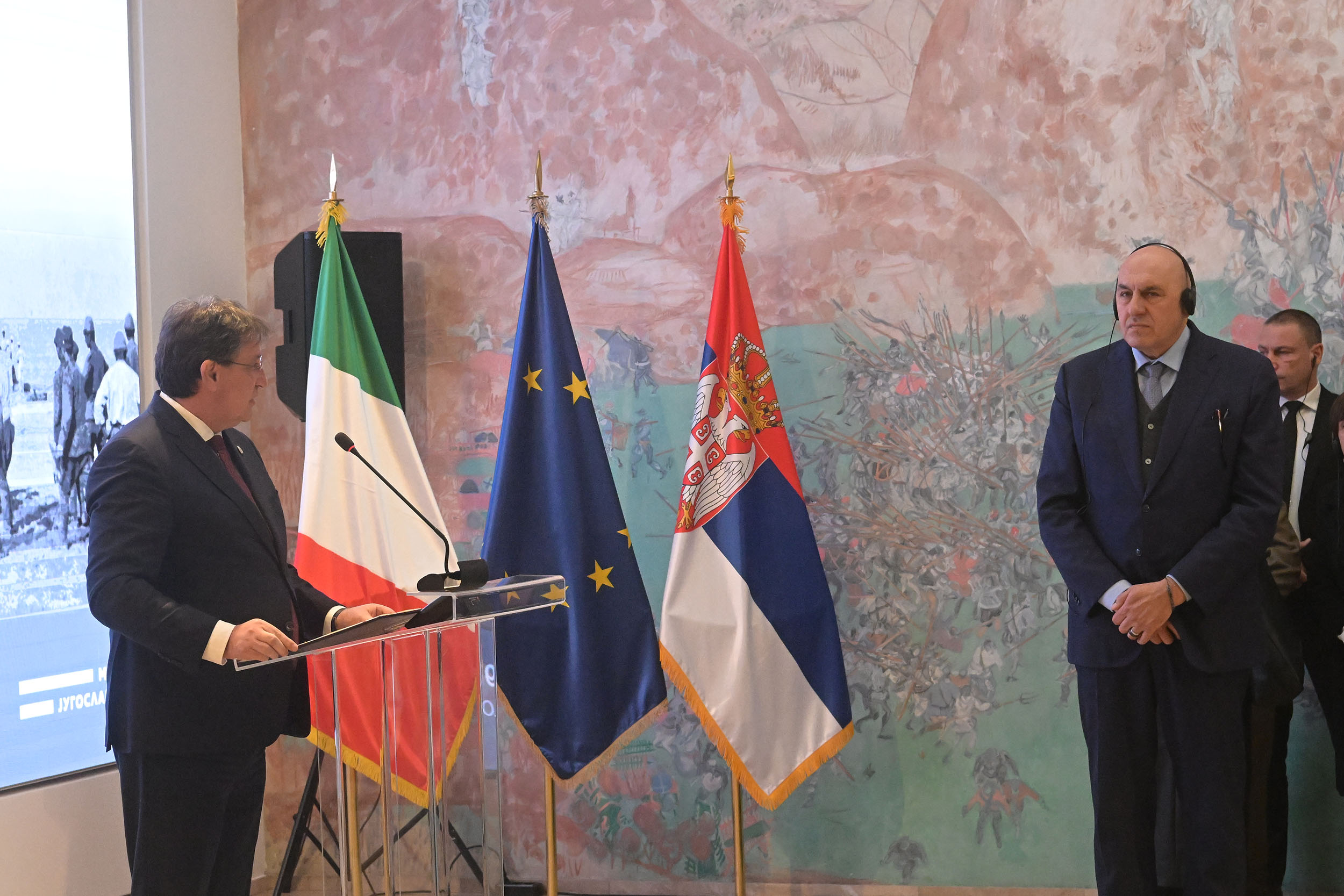
Today, Minister of Defence Bratislav Gašić opened an exhibition titled “Across the Sea, the Rescue 1915-1916, A Story of Italian-Serbian Friendship” at the Museum of Yugoslavia in Belgrade. The opening of the exhibition was attended by the Minister of Defence of the Italian Republic, Guido Crosetto.
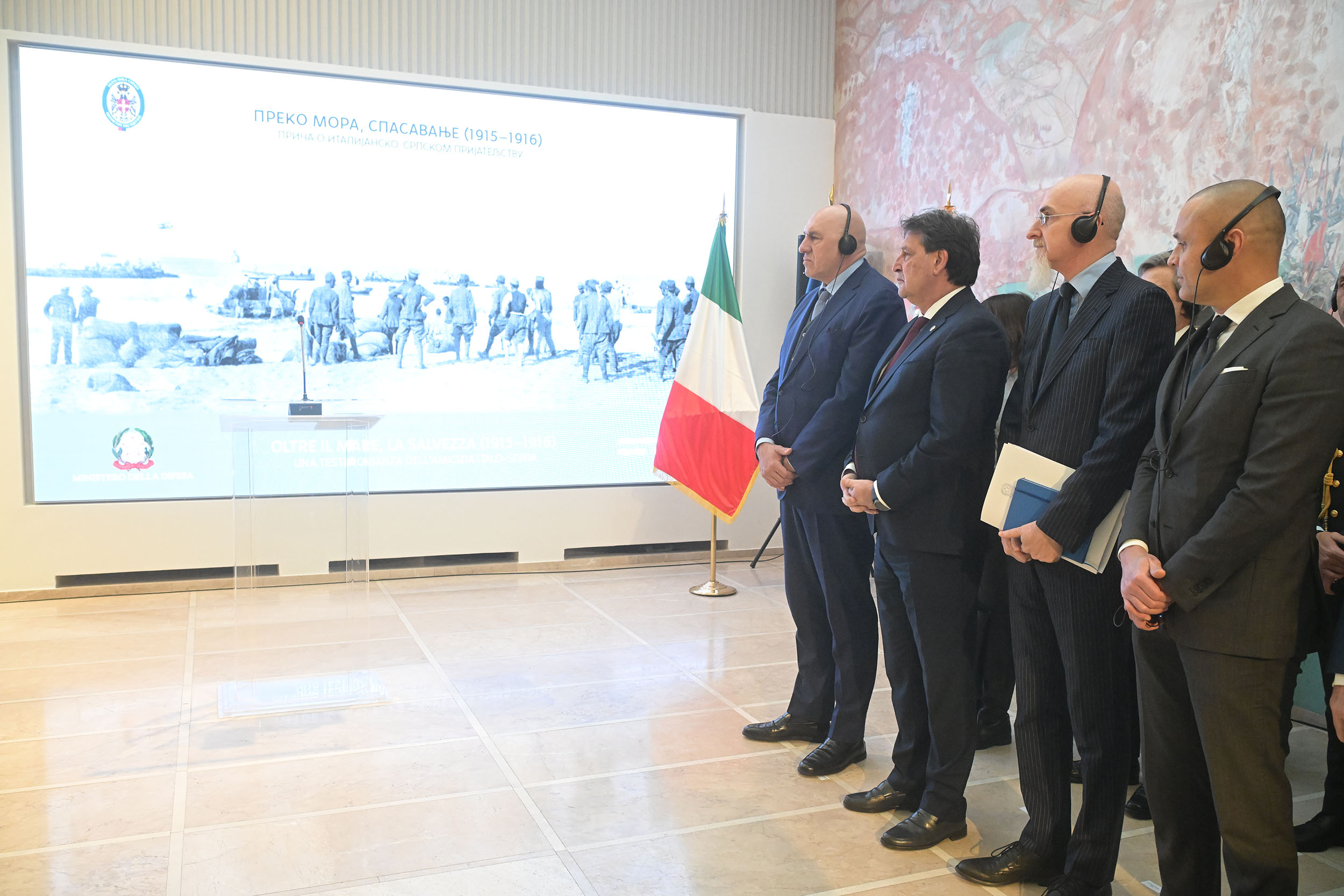
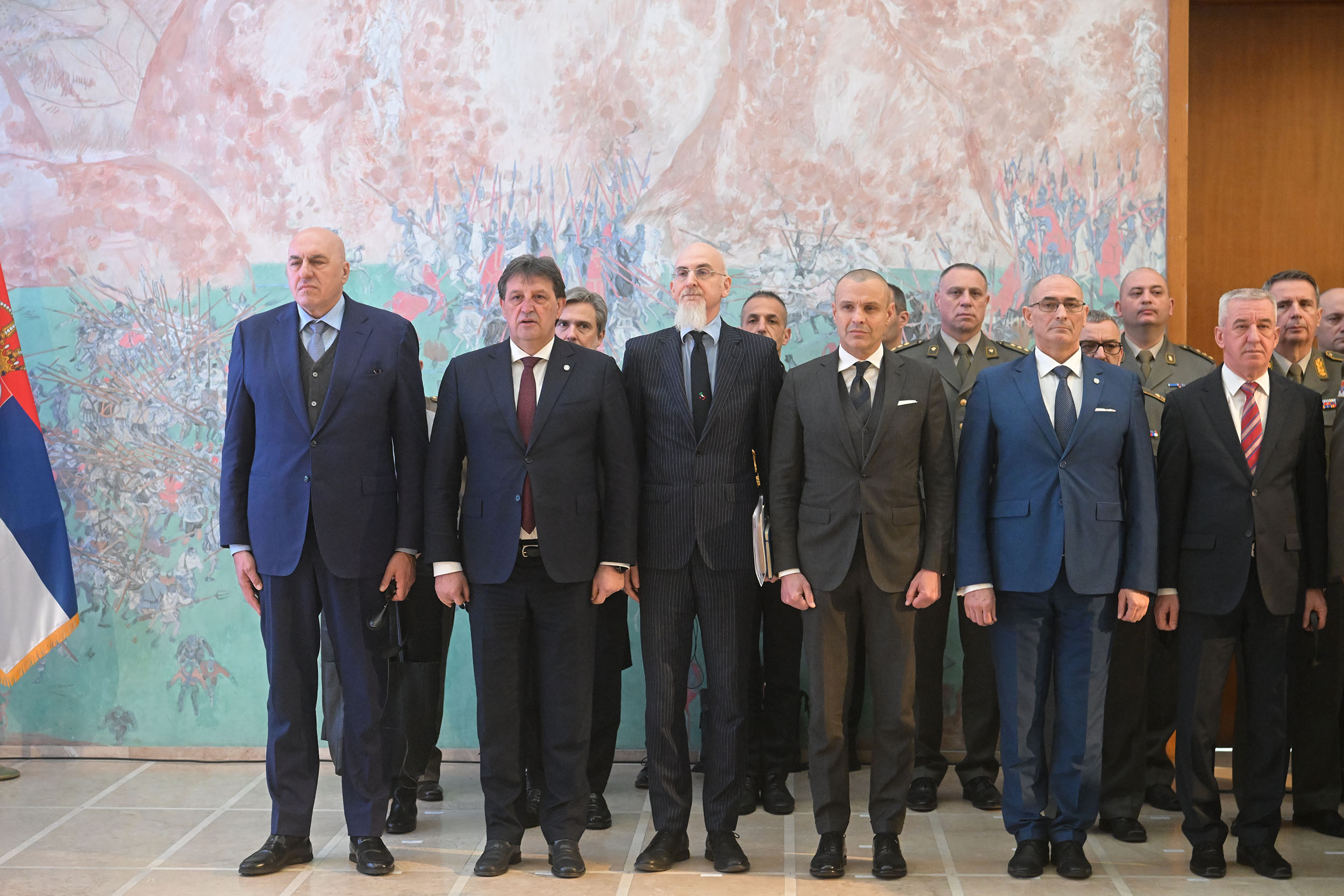 The exhibition commemorating the 110th anniversary of the evacuation of the Serbian army from the Albanian coast during the First World War has been organised by the Military Museum in collaboration with the Military Archive, the Italian Embassy and the Italian Cultural Centre in Belgrade.
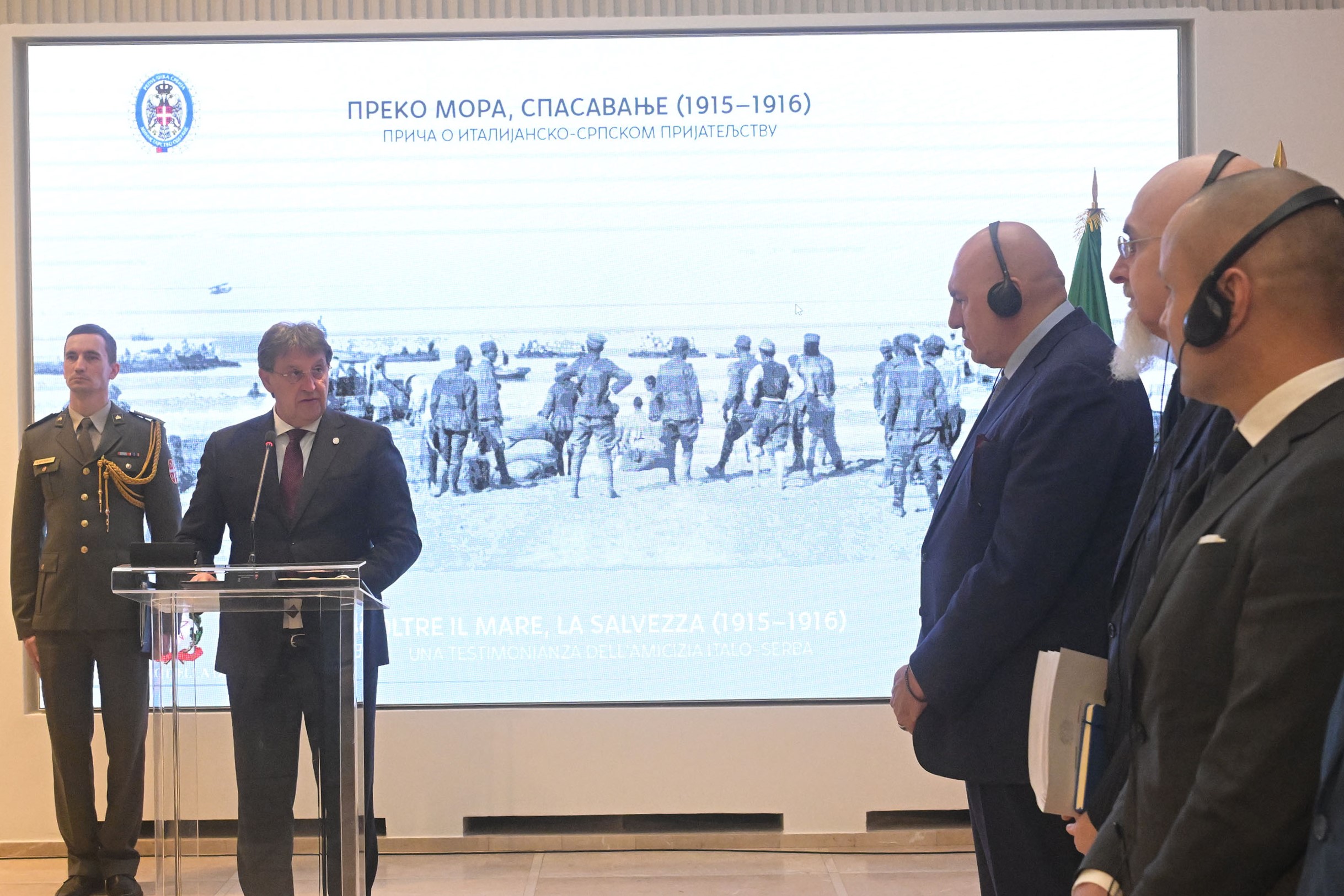
Speaking at the opening, Minister Gašić said that the exhibition at the Museum of Yugoslavia is dedicated to one of the most difficult yet most noble chapters in our history – a period marked by great suffering, but also by true alliance.
 - The autumn of 1915 was a period of great suffering and hardship for the Serbian people. Facing a vastly superior enemy, the Serbian army, together with the state leadership and tens of thousands of civilians, was forced to retreat across the rugged mountains of Montenegro and Albania towards the Adriatic Sea. Through the snow, exhausted by hunger and disease, more than 77,000 soldiers and over 140,000 civilians lost their lives during this three-month ordeal. This gruelling journey has remained deeply etched in the national memory as the Albanian Golgotha – a symbol of sacrifice, resilience, and an indomitable will to survive. In those moments, when all seemed lost, a hand of friendship appeared – said the Minister of Defence.
He recalled that, at the time, the Italian Royal Navy, through great effort and at significant risk, undertook the evacuation of the Serbian army and civilians from the Adriatic coast.
 - That act was more than a military operation – it was an act of humanity, solidarity, and respect among allies. Thanks to that assistance, the Serbian army was able to recover, return to the front, and together with its allies contribute to victory and the liberation of the homeland. The alliance forged in the most difficult circumstances grew into a friendship that has been fostered for more than a century – Minister Gašić noted, expressing gratitude, on behalf of the Republic of Serbia, to Italy and its people for the historic support that forever linked the two countries, and added that Serbia has not forgotten, and will never forget, that assistance.
Minister Gašić noted that today, more than a hundred years later, the relationship between Serbia and Italy is founded on mutual respect, trust, and cooperation.
 - As Minister of Defence of the Republic of Serbia, I want to emphasise that the spirit of that historic alliance is reflected in the partnership between our armed forces, in dialogue, and in the conviction that stability and peace are lasting values that must be safeguarded. History teaches us that friendships proven in challenging times form the most reliable foundations for the future. Therefore, this exhibition is more than a remembrance – it is a confirmation that solidarity and trust stand the test of time. I am confident that today’s event marks another step forward in the joint activities awaiting us in the period ahead – the Minister of Defence noted, officially opening the exhibition honouring the sacrifice of our ancestors and the friendship between the two nations demonstrated by actions.
Italian Minister of Defence Crosetto recalled the wartime events of 1915 and 1916, when the sea became hope and the Italian Royal Navy was given the task to secure Albanian ports, embark exhausted convoys, and take them to safety. He noted that Italian sailors carried out their task with courage, discipline, and selfless dedication.
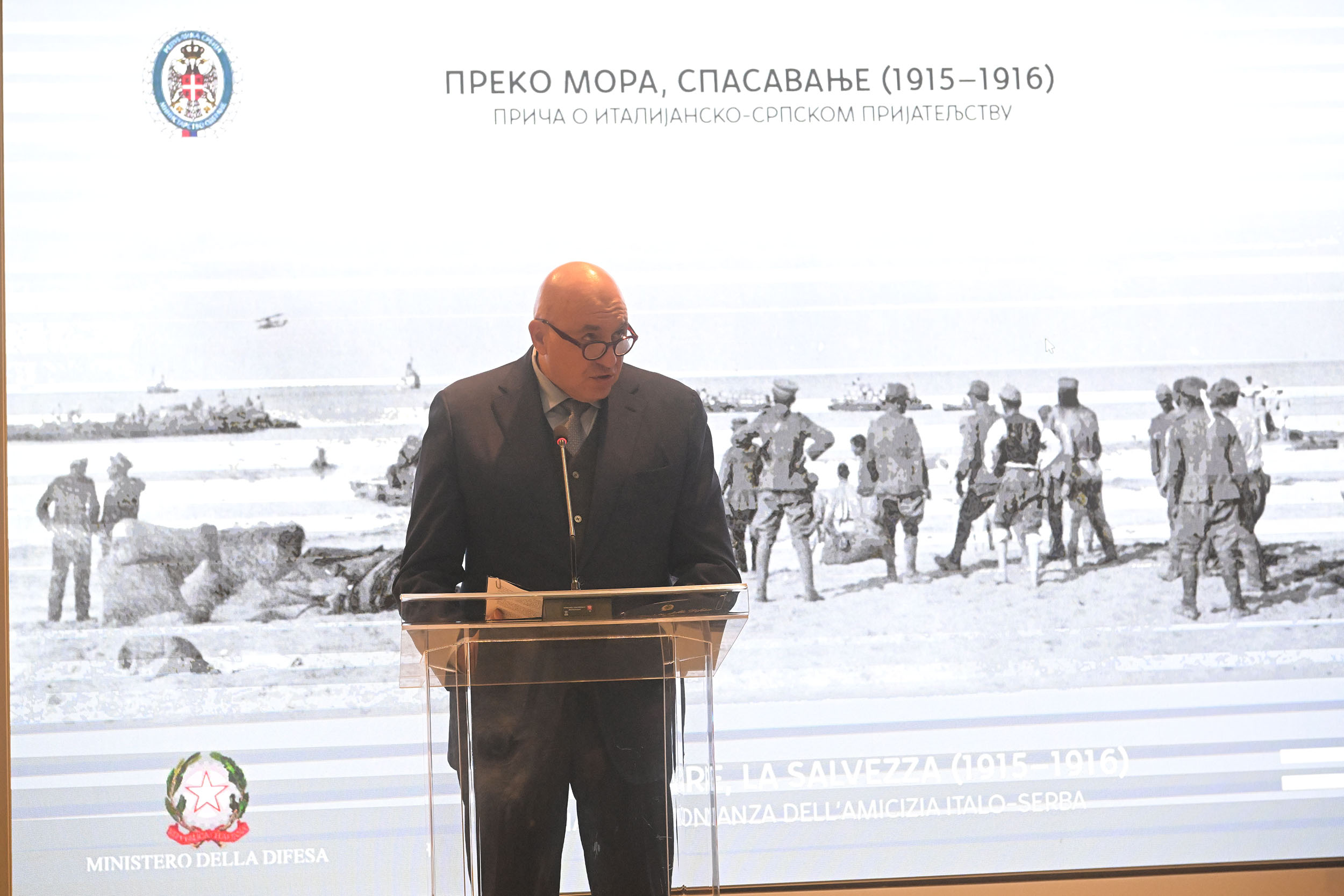 - In addition to being humanitarian, this operation was of decisive strategic significance. On Corfu, the Serbian army was able to reorganise, return to combat, and make a decisive contribution to the defeat of the Central Powers on the Balkan Front. Among those who crossed the Adriatic Sea was King Petar, who refused any privileges over his soldiers. That is a powerful image of dignity and shared sacrifice. That outstretched hand was Italian, it was the hand of our sailors – Minister Crosetto said.
He emphasised that by remembering the historic rescue of Serbian soldiers, we celebrate not only an episode in history, but also a deep bond between our armed forces, our countries, and our peoples.
- History teaches us that the sea does not divide us, it unites us. Cooperation between people in uniform, when guided by shared values, can change the course of events. I would like to thank everyone involved in this important joint project, the historical archives of our two Ministries of Defence, the Military Museum in Belgrade, the Museum of Yugoslavia for hosting us in this beautiful setting, the Embassy and the Italian Cultural Institute. Let this exhibition serve both as a remembrance and a reminder of our responsibility to preserve the history that unites us, and to transform it into closer cooperation between Rome and Belgrade, because Italy views Serbia as a strategic partner in the Balkans – Minister of Defence Crosetto noted.
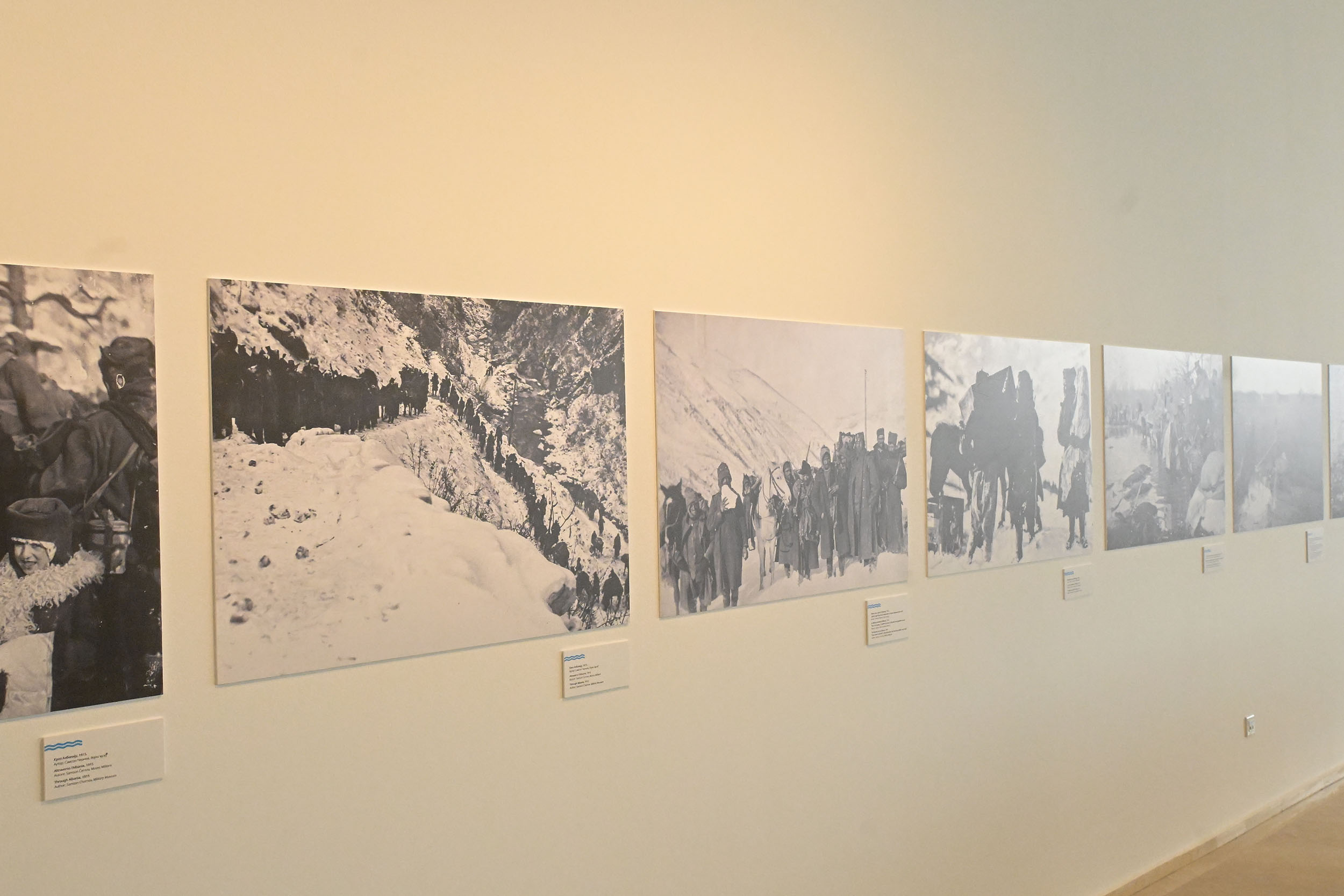
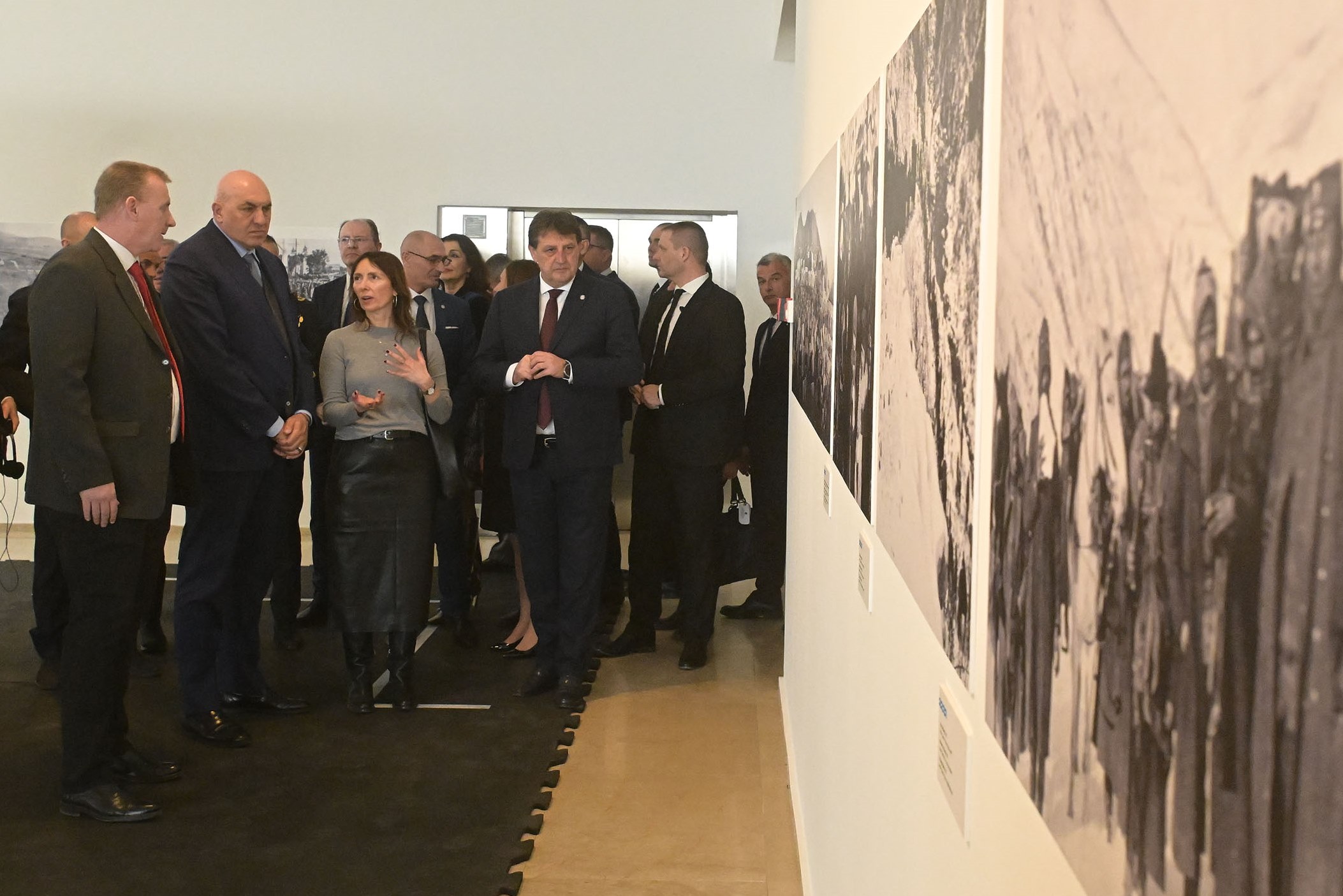 The exhibition features a selection of photographs from the Military Museum’s collection, archival materials from the Military Archive, as well as photographs from Italian archives and institutions that have never been displayed before. These photographs present in chronological order the historical events in late 1915 and early 1916, a period that was decisive for the future of the Serbian state.
The Italian Royal Navy, with the support of British and French troops, carried out over 500 voyages, evacuating around 260,000 people. Serbian soldiers were first transported to Corfu and later to Thessaloniki, from where they launched a decisive counteroffensive that ultimately led to the liberation of Serbia and the Allied victory in the First World War.
 The opening of the exhibition was attended by members of the Defence Minister’s and the Chief of the General Staff’s collegiums, Italian Ambassador to Serbia Luca Gori, and numerous guests.
The exhibition will remain open to visitors until March 10, 2026.
