20.11.2015.
Visit of Secretary General of NATO to Serbia
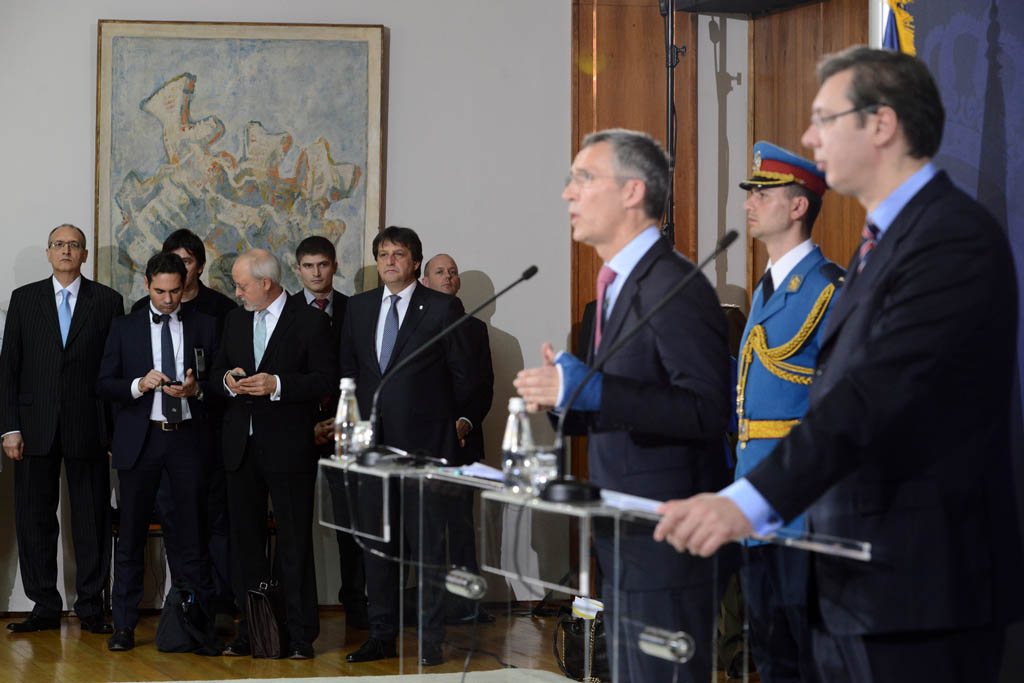
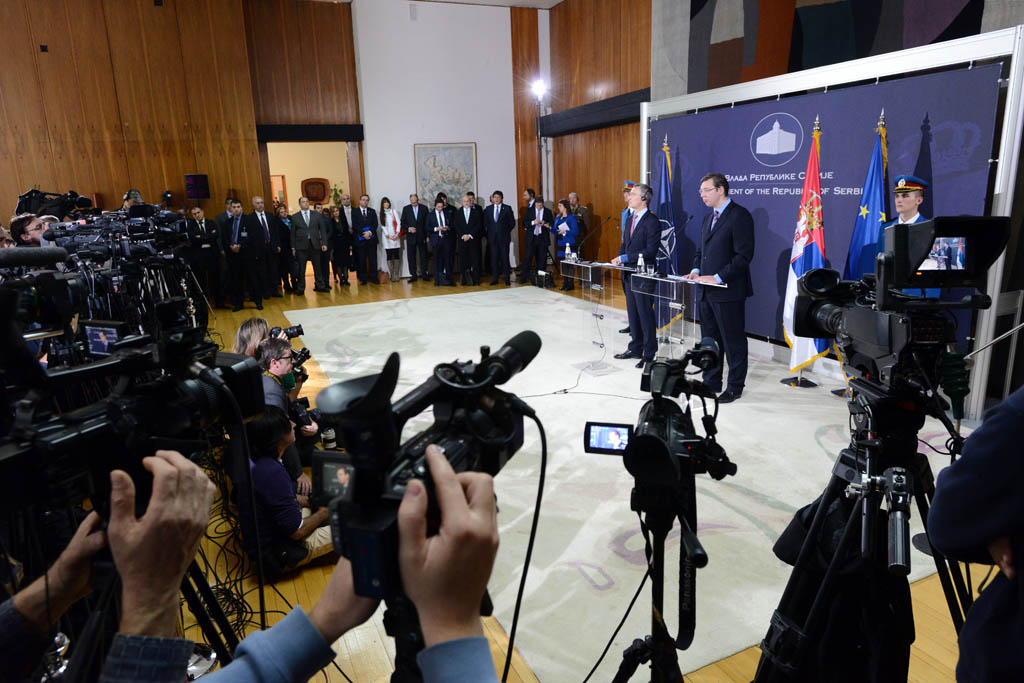
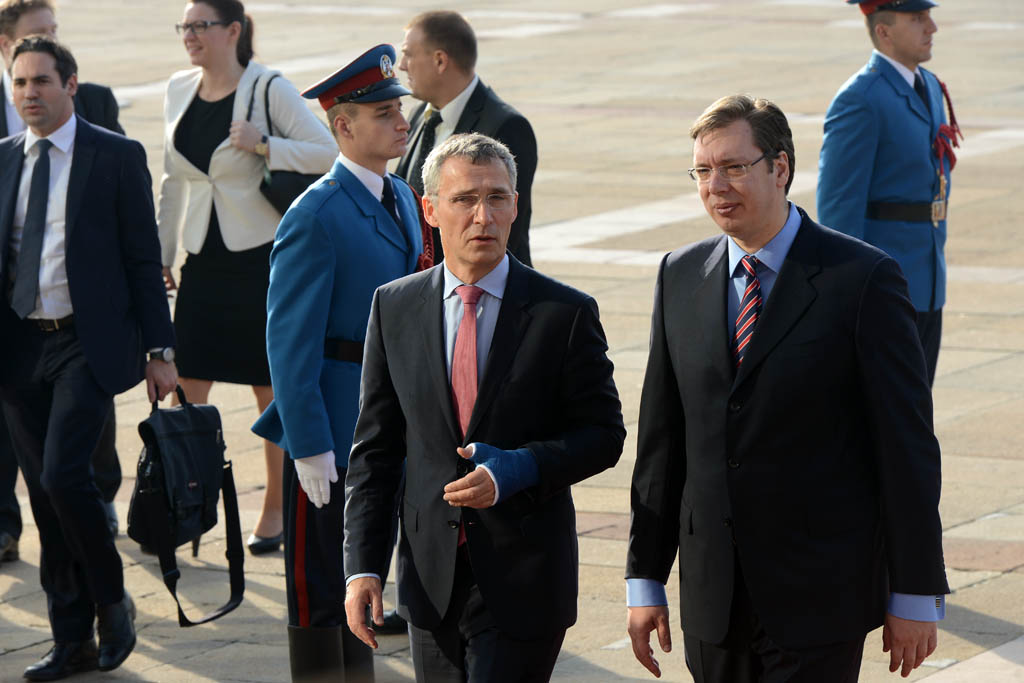
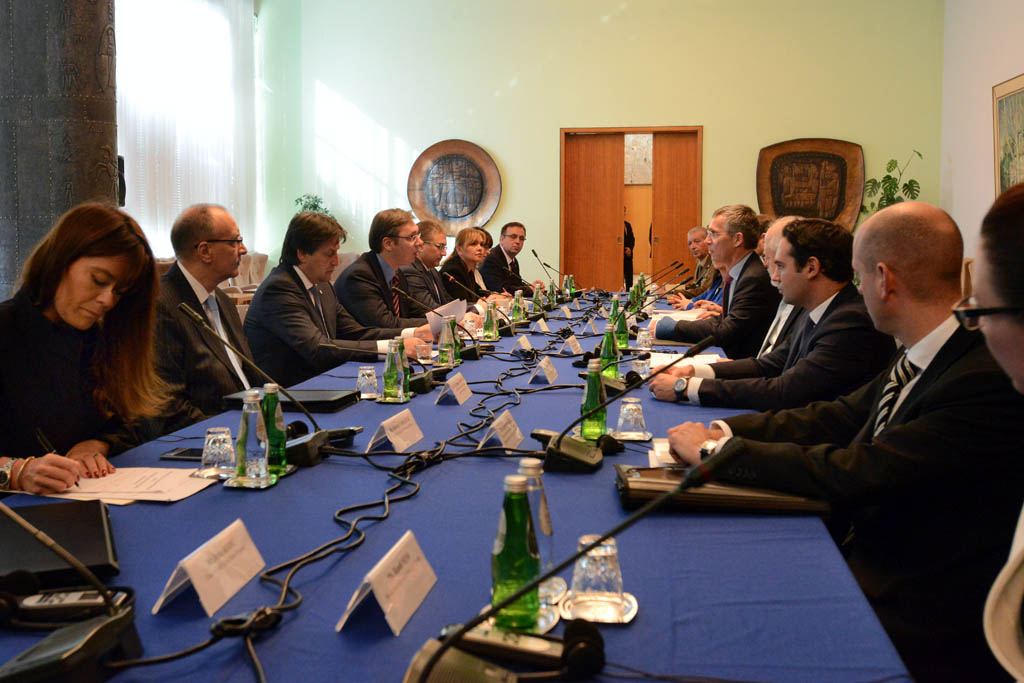
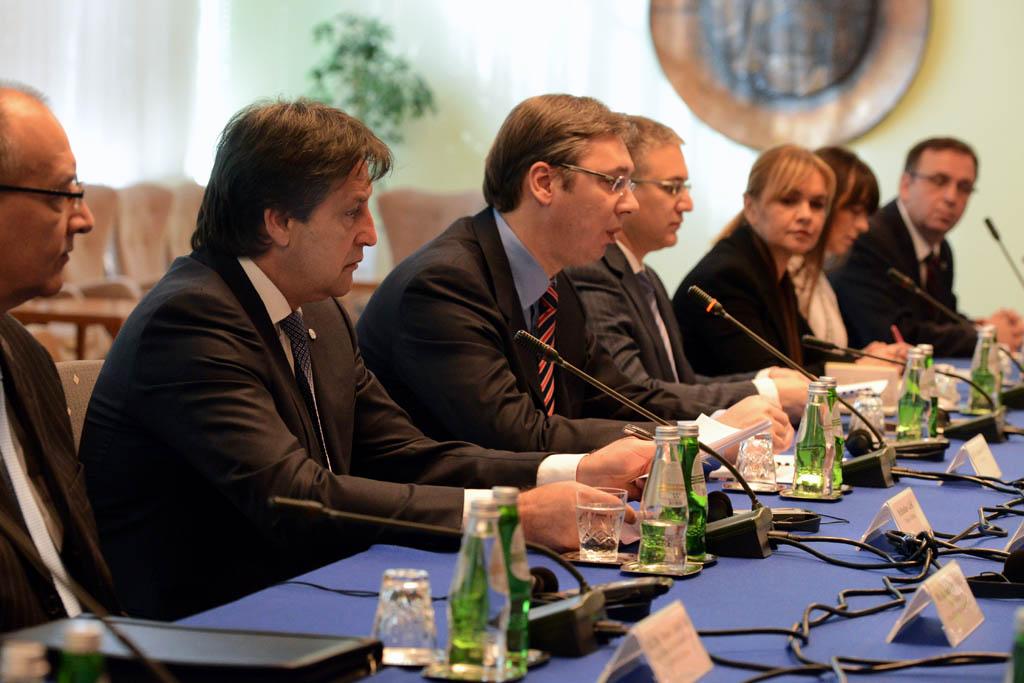
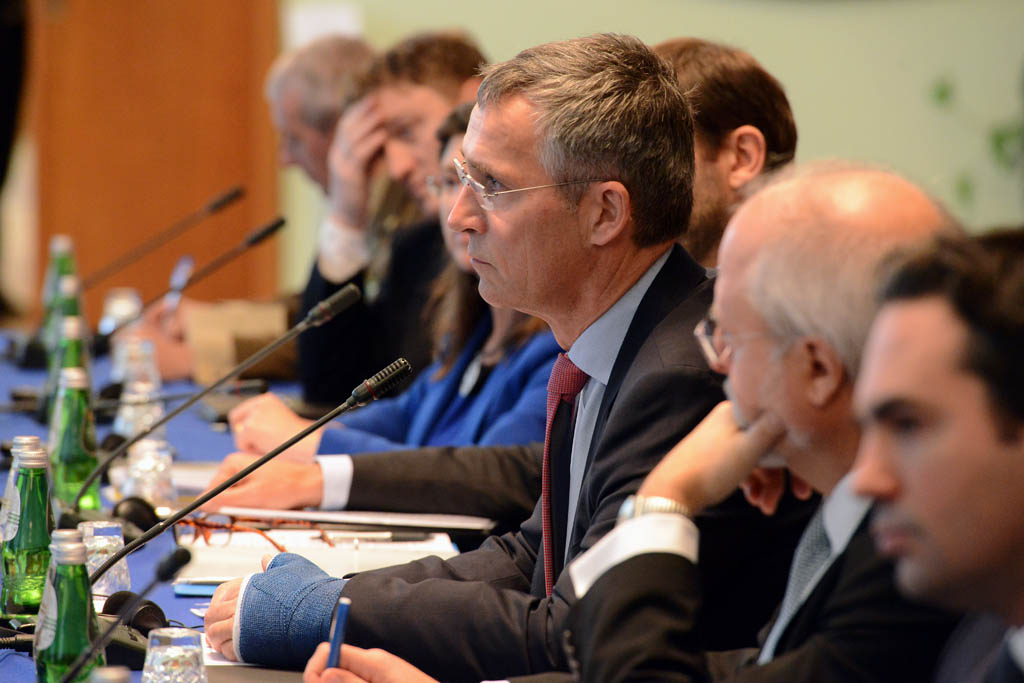
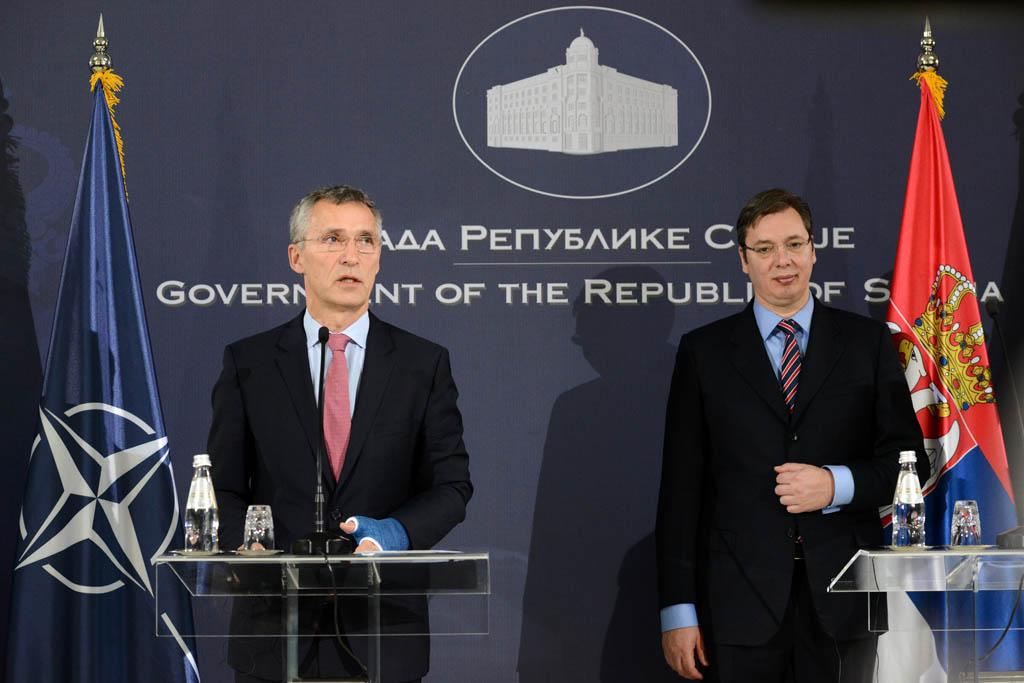
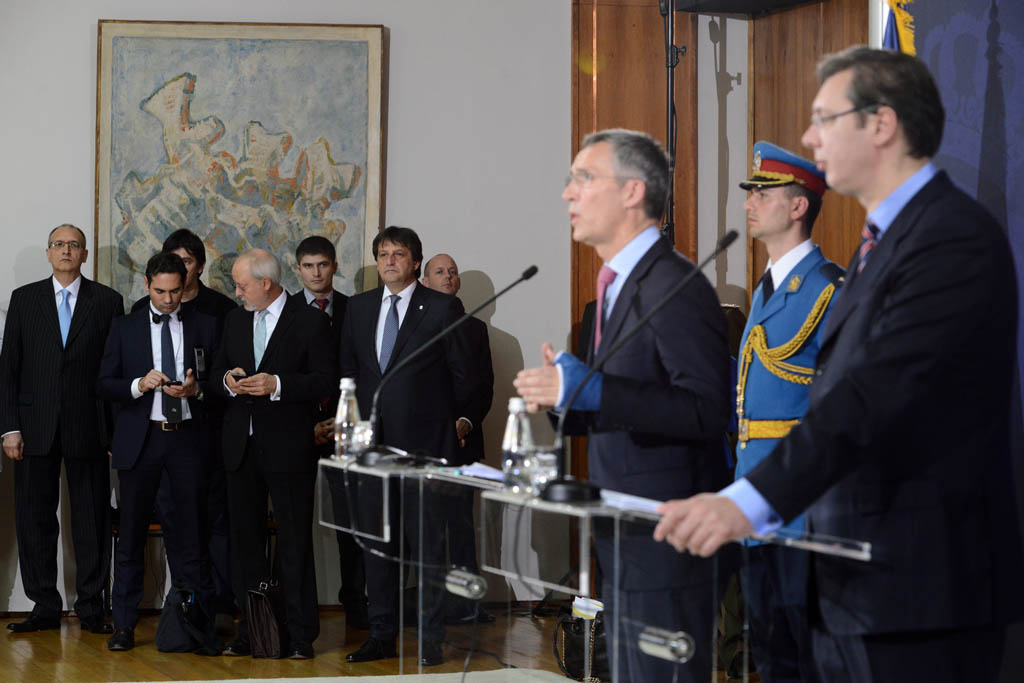
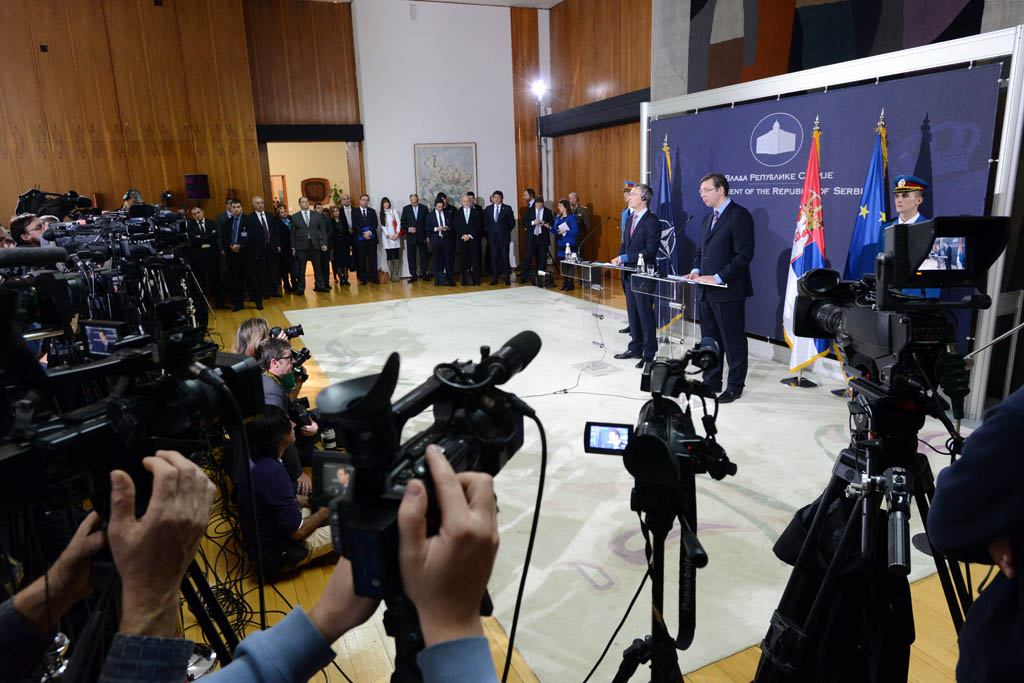
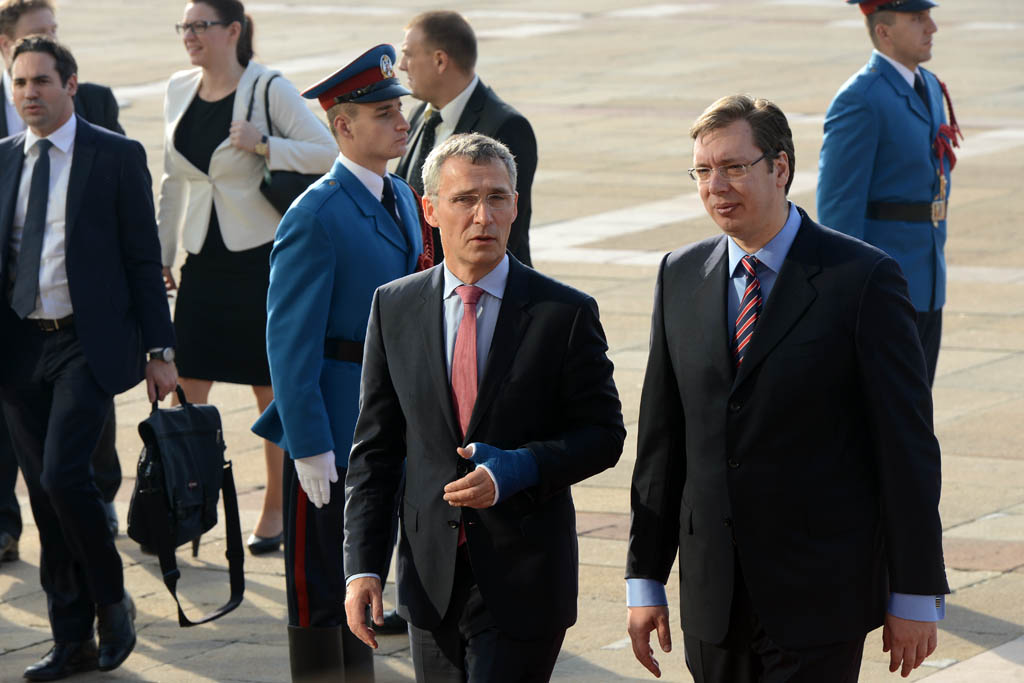 Serbian Prime Minister Aleksandar Vucic met in the Palace "Serbia" with NATO Secretary General Jens Stoltenberg in the course of his two-day visit to our country. After the meeting, which was also attended by Government members, NATO Secretary General said that the KFOR as of today lifted restrictions that had applied to parts of the airspace of Serbia, introduced in 1999, thereby fully relaxing the security zone.
- This is a concrete expression of improving relations between NATO and Serbia - Stoltenberg said, adding that the decision was made on the basis of Serbia's commitment to the normalization of relations in the airspace of the Balkans.
He also pointed out that this is a very important step towards full integration of the region into the European airspace.
- Serbia has an important role in building peace and stability in the Western Balkans, in Europe and throughout the world, as evidenced by
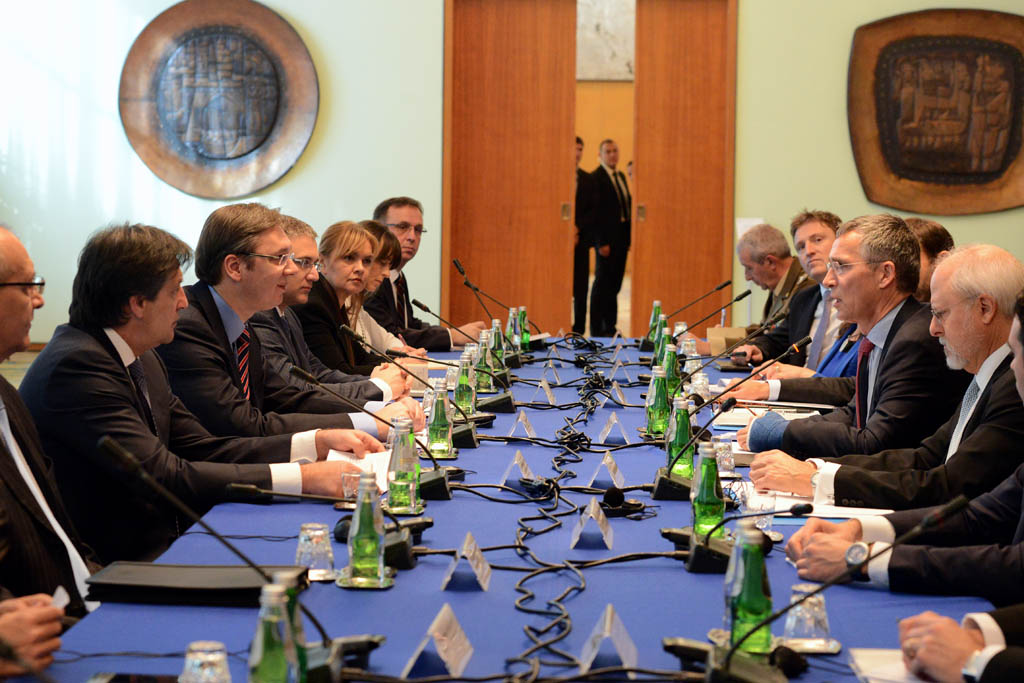 the efforts in taking care of thousands of refugees, Serbia’s OSCE Chairmanship, as well as contributing to international security by engaging in UN and EU peacekeeping operations - Stoltenberg said.
He stressed that the dialogue between Belgrade and Pristina is very important for all, adding that the efforts taken for its continuation are encouraging. Stoltenberg also stressed that the normalization and dialogue are the only way to progress, expressing encouragement to both parties to continue on this path, also acknowledging the important steps that have been achieved in the promotion of Serbia's cooperation with its neighbors.
- I am here today for the new beginning of relations between NATO and Serbia. This is more important for us than ever, because we are facing common security challenges - Stoltenberg stated, adding that this cooperation is mutually benefitial.
He also announced the establishment of a new fund that will help Serbia to destroy 200 tons of surplus ammunition.
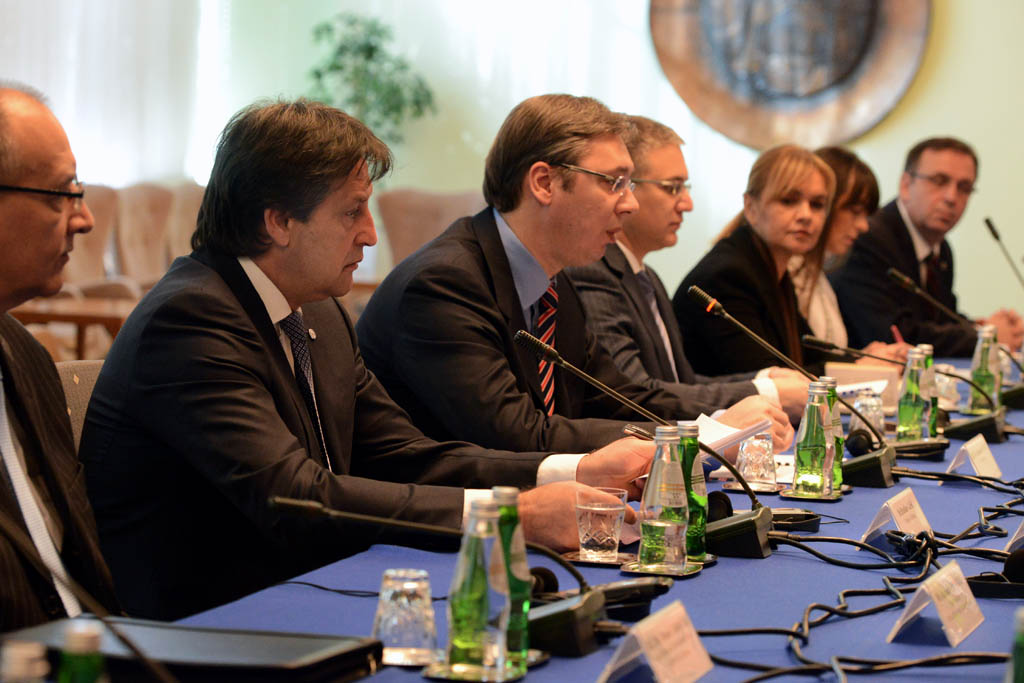 Commenting on future cooperation, Stoltenberg stressed that, while respecting the neutrality policy, as Secretary General of NATO, he strongly believes in the potential of the relations between the alliance and Serbia.
During his speech, he recalled that several years had passed since a NATO Secretary General visited Belgrade, adding that he is aware that there are "strong feelings" in Serbia in connection to the Alliance. The air interventions in 1999, as he said, were not aimed against the Serbian people, but it to stop the unacceptable actions of the regime.
According to Prime Minister Vucic, the visit of the NATO Secretary General, although causing various reactions of our citizens, is very important for our country.
- After 16 years, we no longer have any restrictions within the zone of 25 kilometers in central Serbia, or in the top or the bottom layer. We managed to achieve this thanks to the political dialogue and concrete issues that we have resolved with NATO - Vucic said, adding that this means that after setting up devices in the area, after 16 years, we will have the entire airspace of the Republic of Serbia under our control.
Until now, Vucic said, did not seen Vranje and Leskovac on our radars, and after the setup of the technical means and the achieved
agreement, we will have a much better police and military protection of our skies, which is crucial in defending the country and its sovereignty.
During today's meeting, according to him, they talked among other things about the training of members of our Armed Forces, which, as he stated, is very important for the improvement of functional and operational capabilities of our forces.
Prime Minister Vucic concluded that Serbia is a militarily neutral country and that it has good cooperation with NATO and that it will continue to enhance and deepen it, obeying its parliamentary declaration and decisions on military neutrality.
 - This cooperation also contributes to the fight against terrorism, support in the migrant crisis, preservation of regional stability, better training of our soldiers and officers, and much greater safety and security of our people in Kosovo and Metohija, which is one of the key things – Prime Minister Vucic stressed, adding that NATO and Serbia still do not necessarily agree on certain issues from the past, but that our relations have a bright future.
Prior to the decision on the relaxation of the Air Security Zone, in the presence of Chief of General Staff General Ljubisa Dikovic and KFOR Commander Major General Guglielmo Luigi Miglietta, the Agreement on temporary operating procedures following the full relaxation of the Air Safety Zone was signed in Pristina. On behalf of the Serbian Armed Forces, the Agreement was signed by Deputy Commander of Joint Operations Command Major General Slavoljub Janicijevic.
The air security zone, defined by the Military Technical Agreement, extends along the administrative line with Kosovo and Metohija in the width of 25 kilometers.
During today's meeting, according to him, they talked among other things about the training of members of our Armed Forces, which, as he stated, is very important for the improvement of functional and operational capabilities of our forces.
Prime Minister Vucic concluded that Serbia is a militarily neutral country and that it has good cooperation with NATO and that it will continue to enhance and deepen it, obeying its parliamentary declaration and decisions on military neutrality.
- This cooperation also contributes to the fight against terrorism, support in the migrant crisis, preservation of regional stability, better training of our soldiers and officers, and much greater safety and security of our people in Kosovo and Metohija, which is one of the key things – Prime Minister Vucic stressed, adding that NATO and Serbia still do not necessarily agree on certain issues from the past, but that our relations have a bright future.Prior to the decision on the relaxation of the Air Security Zone, in the presence of Chief of General Staff General Ljubisa Dikovic and KFOR Commander Major General Guglielmo Luigi Miglietta, the Agreement on temporary operating procedures following the full relaxation of the Air Safety Zone was signed in Pristina. On behalf of the Serbian Armed Forces, the Agreement was signed by Deputy Commander of Joint Operations Command Major General Slavoljub Janicijevic.
The air security zone, defined by the Military Technical Agreement, extends along the administrative line with Kosovo and Metohija in the width of 25 kilometers.
 PHOTOGALLERY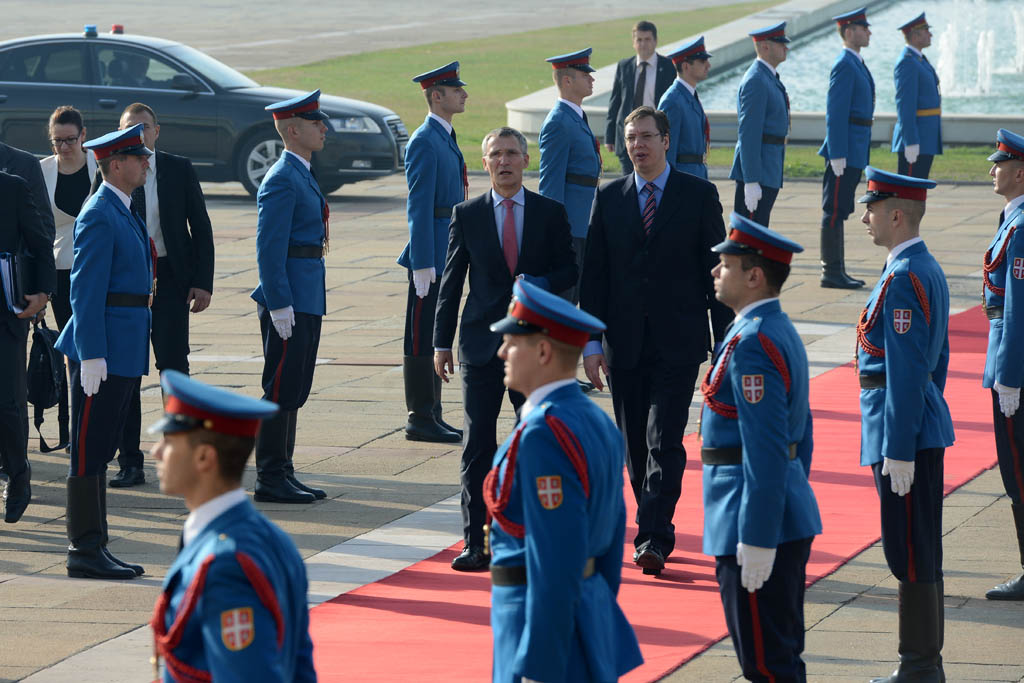
 VIDEOGALLERY