
12.12.2011.
Promotion of the book "Forcing the sands"
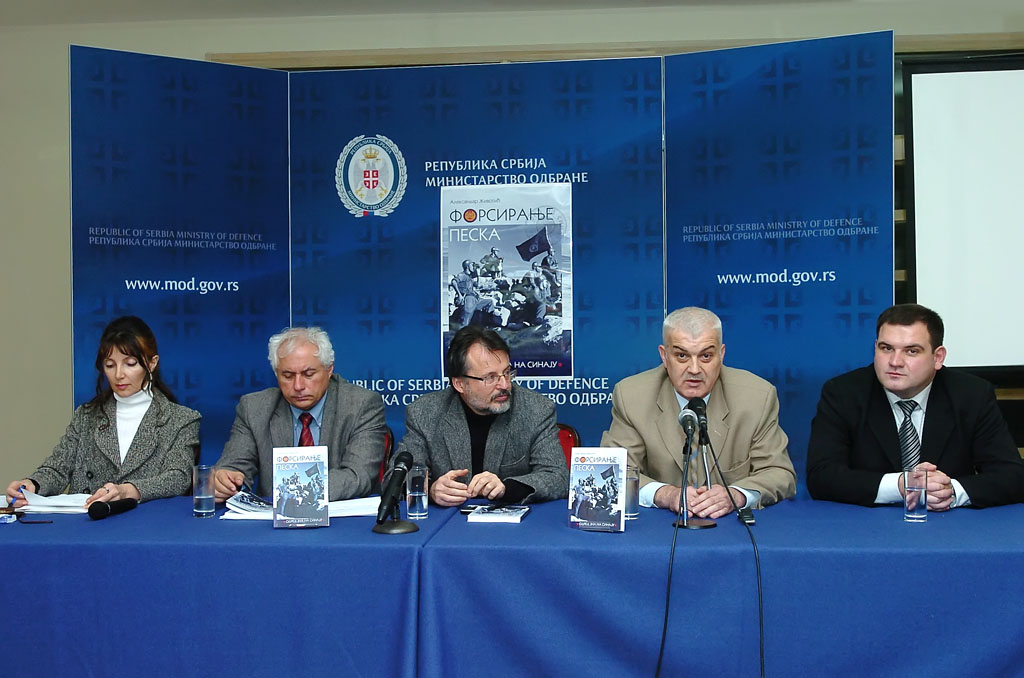 In the House of the Serbian Army a book by Dr. Alexander Životic - "Forcing sand - about the detachment of the JNA in Sinai (1956-1967)" was promoted yesterday. This book describes the involvement of the Yugoslav People's Army in peacekeeping operations in Egypt under the auspices of the United Nations and the following spoke about the book: professor. Dr. Ljubodrag Dimic, Prof. Dr. Mile Bjelajac, Milan Terzic, and director of the Media Center's "ODBRANA," Lt. Col. Slavoljub Markovic and author.
- The book tells about a time when the former Yugoslavia's army's presence in Asia and Africa, and hence its metaphorical title of "Forcing sand" describing how hard it was to survive and build policies. Those were the years of instability of such turbulent events taking place in Poland, Hungary, Cyprus and the Suez Crisis and the emergence of the Non-Aligned Movement - said prof. Dr. Dimic who teaches at the Faculty of Philosophy.
He added that the book "Forcing the sand" was about Yugoslavia and its diplomacy as an important factor of world politics, and the Yugoslav army, which had its peacetime function to preserve world peace.
Alexander Zivotic wrote the book using a variety of resources - which would come in handy to his colleagues in such situations. In this way we get an important info on the Suez crisis and other crises worldwide. the lines from Zivotic book have already been cited and outside Serbia - said prof. Mile Bjelajac, Research Fellow at the Institute for Recent History of Serbia.
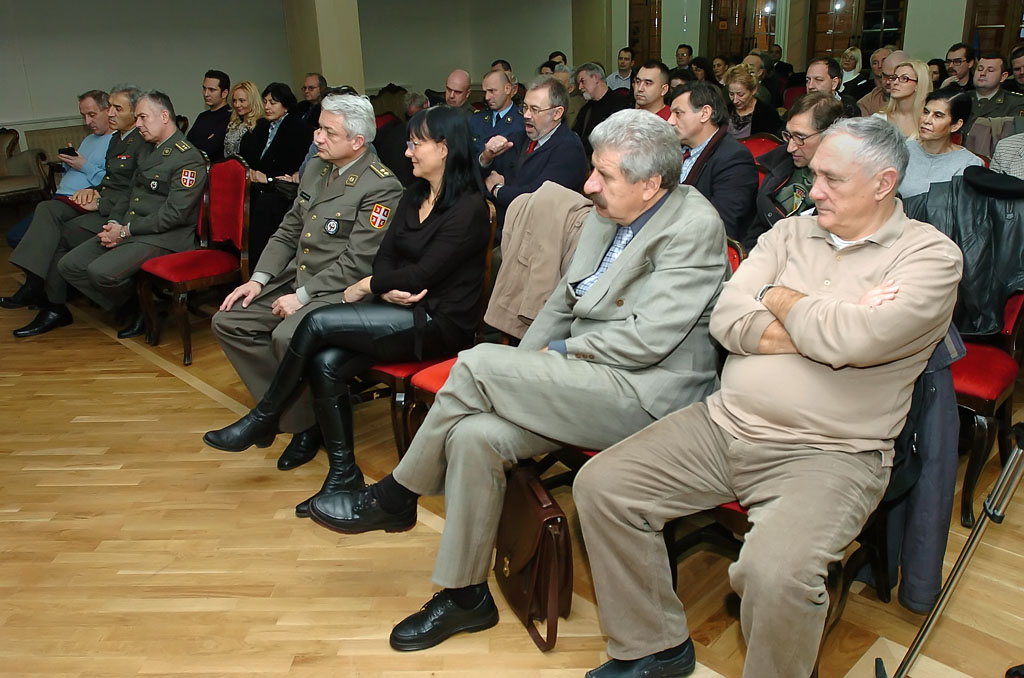 Bjelajac added that the book "Forcing sand" was a great story that is useful for the present time as it talks about the current issue of participation of national military contingents in peacekeeping operations under the joint command.
His colleague, Dr. Milan Terzic, Head of the Military History Institute for Strategic Research, said that Alexander Zivotic was the youngest doctor of historical sciences in Serbia and that his particular interest relates to the military area.
- After Yugoslavia had split with the Soviet Union in 1948, it was left to float on the sea of world politics. It is time to write a piece about a serious country that participated in the world history and has managed to maintain its 11 years of peace-keeping contingent in such an unstable region as Mt. Sinai. Yugoslavia was torn between East and West, a contingent of the Sinai was a device of its foreign policy. Today, when people wrote more books than they read, we believe Životic writes under a number of relevant historical sources - said Dr. Terzic.
The Publisher of the book "Forcing sand" is the Media Center "Odbrana". It was a result of research of Yugoslav politics in the Middle East during the Cold War. Alexander Životic has prepared it for seven years and during that time he studied the documents that led Detachment of the JNA in the Sinai, as well as documentation in the Diplomatic Archives of the Ministry of Foreign Affairs, Military Archives, archives of Yugoslavia and archives of Josip Broz Tito.
-
 Writing about the existence and operation of the JNA detachment in the Sinai in the period from 1956 to 1967, I tried to put the whole issue in the context of then Yugoslav foreign policy in the Middle East along with the creation of the Non-Aligned Movement. I tried to show what stages Yugoslavia had undergone - from a war-torn and ravaged country to a country that was a factor in international relations. She took part in solving pressing global problems only limited to its borders - said Dr. Životic.
Aleksandar Zivotic is one of the most significant Serbian historians of the new generation. His professional interests are primarily focused on studying the history of Yugoslavia and Europe in the twentieth century, exploring the history of the Cold War and the study of modern history of the Balkans from the perspective of international politics.
