15.11.2010.
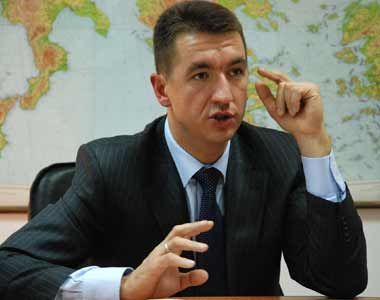
Interview with State Secretary Dusan Spasojevic to DANAS
Five members of the Ministry of Defence and the Serbian Army will soon begin engagement in the United Nations peacekeeping mission in Lebanon within the framework of the Spanish contingent. Members of our armed forces will be sent to the mission as staff officers and officers of civil-military cooperation - told Dusan Spasojevic, State Secretary in the Ministry of Defence to DANAS daily.
 According to him, the officers who will be engaged in the mission in Lebanon in the first rotation will, apart from performing functional tasks in the operation, also serve as a predecessor, or will be tasked with becoming familiar with the situation and the need in the field. Spasojevic added that based on the assessment and the agreement with Spanish partner the next rotation can see an increase in our capacity in the UN peacekeeping mission in Lebanon.
In what way will the participation of the MoD and SAF in the mission in Lebanon differ from the current mission?
- The nature of involvement of SAF in multinational operations in Lebanon will not be any different from previous UN multinational operations. As part of the mission in Lebanon, members of the SAF will execute tasks as mediators between conflicting parties, through monitoring, patrolling and reporting of interruptions of the ceasefire. In addition, this mission will continuously provide support and assistance to citizens in the normalization of living conditions and establishing the rule of law.
How many members of MOD and SAF have participated in international peacekeeping missions and in what positions?
-We have so far had 207 members of the Serbian Armed Forces participating in multinational missions, including 36 members currently deployed in five UN peacekeeping missions - in Côte d'Ivoire, Liberia, Democratic Republic of Congo, Chad and Cyprus. Members of the Ministry of Defense and the Serbian Armed Forces were deployed as military observers, as staff elements and members of the patrol. There are members of AMET teams, members of the medical teams for the evacuation by air which is composed of six members in DR Congo and the medical unit of 14 members in Chad.
In what missions have the members of our army participated so far? What are the next missions with the MoD and SAF members as participants?
- Serbia has so far participated in seven peacekeeping operations. Besides these five, we have participated in multinational and UN operations in East Timorfrom 2002 to 2004 and in Burundi2004-2006. In the coming months we will participate in a UN peacekeeping operation in Lebanon, where we will be within the Spanish contingent. Also, we expect to engage in military operations of the European Union for crisis management. In addition to participating in new multi-national operations, we plan to increase our capacity to their existing missions.
It was announced that members of the MOD and SAF will soon participate in EU missions. What this represents for Serbia?
- One of the basic principles of the current defense policy is to participate in peacekeeping missions, in order to raise the reputation and the prestige of each SAF member and our country. Serbia's EU membership, as our country’s top foreign policy priority, entails an adjustment of standards applicable in the EU.In view of this, if we want Serbia to go faster on the path towards the European integration, it is only natural that we should make necessary contribution by participating in foreign missions within the Common Foreign and Security Policy. In this regard, I expect that next year we will start with the engagement of SAF in one of the numerous civil-military EU missions. It is realistic to expect a smaller-scale involvement at first, and in time our involvement will intensify. Just as we show that we are responsible and credible member of the worldwide organization by getting involved in UN peace missions, our potential participation in EU missions can strengthen the capacity of our foreign policy and accelerate the process of Serbia’s integration within the EU.
Author: Bojan Cvejic
