
01.10.2009.
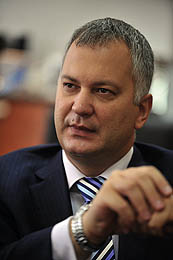
Interview of Minister Sutanovac to "Vreme"
“Serbia will be an island in NATO soon, because all the surrounding countries will be in NATO or have NATO forces on their territory. What kind of relations should we have with traditionally friendly countries like Greece, Romania, Slovakia and Spain, from whom we are expecting help and which are providing us with strong support?” It is unlikely that there would be a debate on this any time soon, but that the time would come when an important question would be asked of Serbia. We will have to demonstrate a lot of courage to explain to the public what the advantages of security integration were.
The National Security Strategy and the Defense Strategy Drafts will be placed before Serbian MPs for adoption on 6 October. As Dragan Sutanovac, defense minister states in his interview to Vreme weekly, stated: this was a very important as these three documents, in addition to the strategic defense review already adopted by the parliament, represent the top three strategic documents in the military system.
Despite the strategic character of these documents, they can be easily amended by the parliament and they do not represent Serbia’s final orientation. These documents, actually, represent an assessment of risk, current state of affairs, threats and analysis of the future and certain guidelines for further activities which can ensure the stability of our country, and its progress into a regional leader.
Minister believes that there will always be those who might say that these documents should have been adopted sooner, and he agrees with them on this. However, it should be noted that certain countries still do not have this strategy, and are rather influential in the world. “Bulgaria has joined EU and NATO, and did not have these strategies or take Russia for an example which only recently adopted these strategic documents. Better late, than never, I say”
VREME: MP’s will have to place under consideration amendments to the Acts on Defense, on SAF, as well as the proposals of the following laws: Law on work, material, and military duty, the Law on Civil Military Service, Law on Deploying SAF and other forces in multinational operations beyond RS borders, as well as law proposals on the Military Security and Military Intelligence Agencies. What are the novelties this set of laws will bring?
DRAGAN SUTANOVAC: The Laws on Defense and the Serbian Armed Forces were adopted two years ago, and the practice showed that certain solutions were just not good enough for full professionalization and modernization of SAF. In some aspects, we are pushing the age limits, as for some specialties it would be illogical to have to retire someone who is only 40, which is why we pushed this limit to the age of 50.
The law on SAF deployment in multinational operations is a new, modern law, which should enable Serbia to take active part in peace operations around the world, which would further raise our reputation. Law proposal says that it is only the Parliament, which can approve the deployment of our forces in these missions, while all mission participants are volunteers.
All countries wish to have good relations and an international influence strive to be part of these missions. This is a modern way of defense, a system implemented by all EU countries we strive to join. Let me remind you that former JNA had several thousand members in peace missions in crisis zones all over the world, which set our army apart from other armies in the region.
Another very important among the systematic laws is the law on security agencies, which defines the method of work and coordination of these agencies. This is finally being included into a legal framework, which would leave no room for dilemmas about their activities and their method of work. In order to gain complete control, we are going to introduce the institute of a general inspector, which is a novelty in our agencies.
General inspectors will not run the agency, they will supervise their work and will control them, but will not have the authority to impede, slow down or check the work of these agencies in any way. Their main duty is to inform the state organs if there is a breach of law pertaining in the work of these agencies.
VREME: What is the real control over VOA and VBA (Military Intelligence and Military Security Agency)?
D.S. Unfortunately, this control is not at the level of other democratic countries, however, our intention is to raise this to another level, and I have even noticed that the members of these agencies support this decision. Despite our efforts to wash away the stain on the work of these agencies in the past, there are still echoes of these activities cunningly used by certain part of the civil society in order to criticize the system of defense and our police force. I am certain that with the adoption of this law, with the supervision of management, parliamentary control and the control of the public which is always present. These agencies will find it much easier to work and achieve better results.
VREME: How much are you cognizant of the activities of these two agencies and what are heir biggest problems?
D.S. I am aware of their activities yet I do not have full insight into it, since that would require me spending a lot of time on it. It is virtually impossible, but, I can safely say that the quality of information I am receiving is quite satisfactory. We have not had a single scandal in the defense system in the last two years, however, we tried to curb position abuse activities, which all bespeaks of VBA’s efforts to do its job well.
VREME: There are debates about Serbia’s military neutrality and its joining NATO. What kind of army do we need and what size?
D.S.Defining the number of SAF members is not directly linked to the NATO membership or our neutrality, and should we opt for NATO, it is only natural that we will need a smaller army. NATO never told us “You should never exceed this number”. All armies in the world depend on strategic and financial projections, and naturally, modern armies have modern weapons which do not require a high number of manpower. A number of 36000 members is an optimum which can meet our needs. Unfortunately, we missed a chance to procure modern weapon systems in the last twenty years and this is our next time in the course of the reform. What we are focusing right now on is the harder part of the reform.
VREME: "What is a better option-military neutrality or joining NATO, in your opinion?
This dilemma exist only in the public’s eye at this moment. No one in NATO has offered us to join them.
Serbia is still not fully participating in the Partnership for Peace. I think that within that partnership, there are a large number of possibilities and high-quality activities that Serbia has yet to exploit,”
”The parliament has adopted a decision on military neutrality, even though that decision has not been adopted on the basis of strategic documents or visions of cooperation in the future.”
“Serbia will be an island in NATO soon, because all the surrounding countries will be in NATO or have NATO forces on their territory. What kind of relations should we have with traditionally friendly countries like Greece, Romania, Slovakia and Spain, from whom we are expecting help and which are providing us with strong support?
It is unlikely that there would be a debate on this any time soon, but a time would come when this important question would be asked of Serbia. In that moment, we will have to demonstrate a lot of courage to explain the benefits of such security integrations.
VREME: Can we expect SAF members to depart for missions where there would be a lot of combat actions, such as in Afghanistan, besides current missions, where mostly the members of the medical teams used to participate so far. DO SAF have technical equipment adequate for such missions?
This option is too far ahead and we can only consider participation in less complex missions where we can assist other international forces. We are currently present in Chad Congo, Liberia and Cóte d Ivoire. Our presence in Chad has sparked the attention of all the international community, and it is our opinion that there is a number of missions where our assistance would be valuable.
 Afghanistan was a topic in 2006, and let me remind you that the Government of Vojislav Kostunica had decided to send our medical team, I ma sorry this decision was never realized. If we had been partners in collective security system, I am sure that certain problems we had later on would have been avoided.
VREME: What is the current situation during this financial crisis? What did we have to give up?
D.S. We have been spending budgetary funds very carefully for the last two years. Even though the budget re-balance deprived us of certain sums for procurement of modern technical equipment and weapons, and for certain infrastructural projects, we have not felt the full brunt of the crisis. This shows that there is room for saving, and that actually there have been large money leaks through the system and that there was no real control over the funds. We are going to introduce an even bigger financial control over military funds which is a precondition for even better civil control.
Unfortunately, though, we did not manage to finish all projects regarding infrastructure, due to lack of funds, or poor way of opening public competition. We did not finish the base in the south of Serbia in 18 months as we had planned, even though we predicted to finish it in less than a year. on the other hand, we completed reconstruction of Batajnica air field in 2.5 months thus giving this air field a new look, which proves that there are companies in Serbia ready to perform works in the scheduled deadline.
We purchased modern arms last year too, but it is up to the state to do this more seriously. In some countries, special laws on procurement of weapons are passed, and we will have to refresh our weapons system.
VREME: What is the current state of military grounds and facilities and what about selling them?
D.S. A part of this military property will be sold to the local self-government, that is, they will be swapped for certain residential objects. Crisis has hit hard the real-estate market, and I do not wish to sell military property for peanuts, just to get rid of them. On the other hand, we managed to exchange some facilities, and this process is very slow, but safe. I most concerned that no scandal occurs, and we have been quite successful in avoiding them in the last 2.5 years.
